Think Rinsing Is Enough? How to Truly Maintain Fresh, Vibrant Artificial Turf
Stop spraying your lawn and thinking the job is done. It is a common myth. Homeowners across the country have been sold a lie that synthetic grass is a "zero-maintenance" solution. It is low-maintenance, certainly, but ignoring it entirely is a recipe for a matted, stinky, and dull-looking yard within three years. If you want your Artificial Lawn to actually last the twenty years promised on the brochure, you need to move beyond the garden hose. Water helps. It doesn't cure.
The truth is that dust, organic debris, and pet waste don't just vanish because the grass isn't real. They settle. They compact. They undergo chemical changes that can ruin the backing of your turf and create a breeding ground for bacteria. You wouldn't "clean" your indoor carpet by just splashing a cup of water on it, would you? Of course not. Your outdoor carpet deserves the same logic. At LFL Henderson Artificial Turf, we see it every day: beautiful installations that look ten years older than they are simply because the owner thought a quick rinse once a month was sufficient. It isn't. Let’s talk about what actually works.
The Hidden Dangers of "Rinse and Repeat"
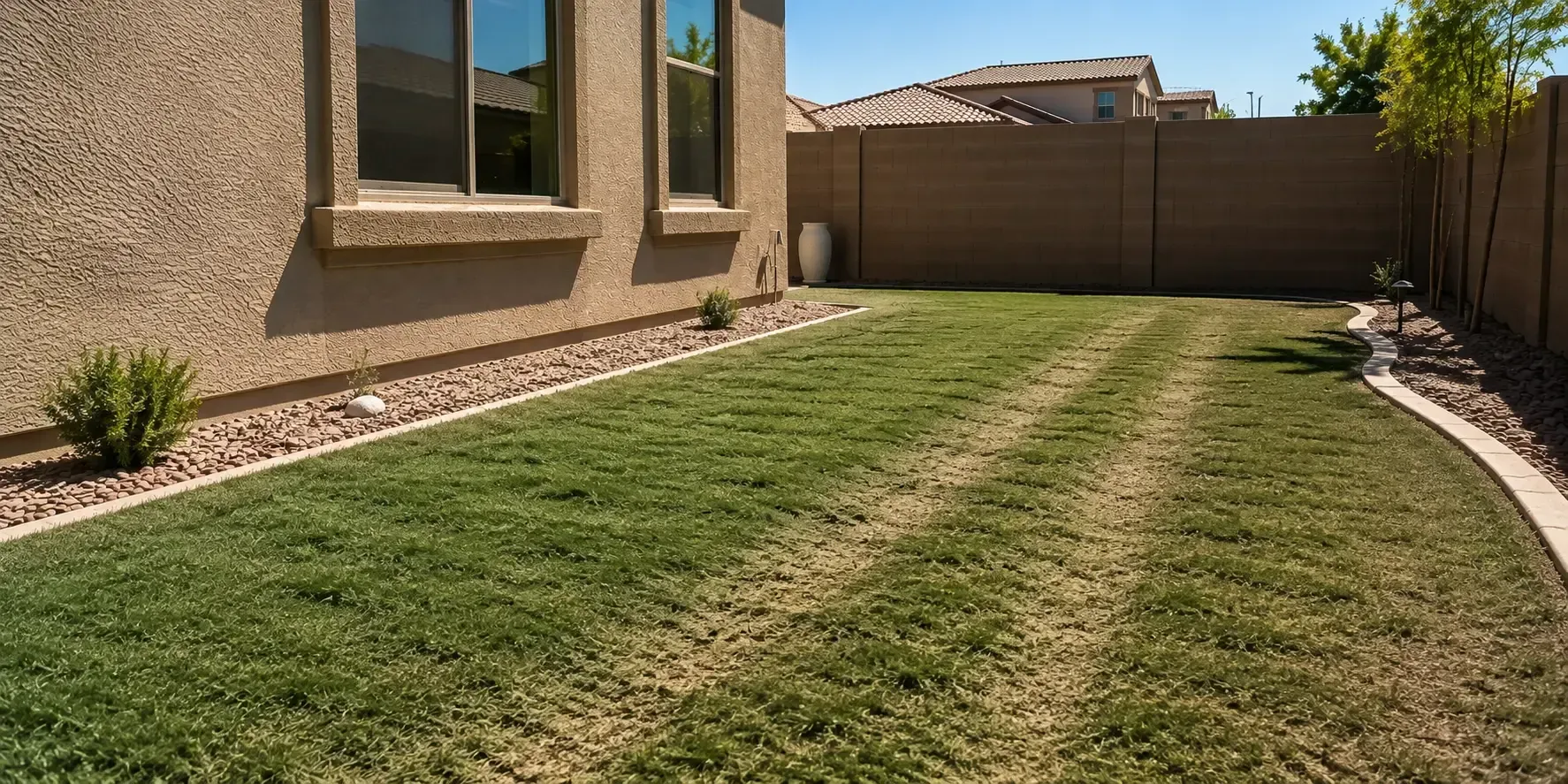
When you spray your turf with a hose, you are mostly moving surface dust around. A significant portion of that dust doesn't wash away; it migrates down into the infill. Over time, this creates a "sludge" layer at the base of the fibers. This layer prevents proper drainage. When the next rain hits, instead of the water flowing through the perforated backing and into the sub-base, it sits. It stagnates. You might notice a slight "swampy" smell or even see tiny weeds starting to sprout in the accumulated silt. This is the first sign of a failing maintenance routine.
Furthermore, if you live in a dry, dusty environment like Nevada, the mineral buildup from hard water can actually coat the synthetic blades. This makes the grass look gray and chalky. It robs the lawn of that vibrant, lush green that made you buy it in the first place. To keep things looking sharp, you should check out the resources on Our Homepage to see what a truly healthy, well-maintained lawn should look like. If yours looks dull, it’s not the grass’s fault. It’s the minerals.
Hard water is a silent killer for aesthetics. In Henderson, the calcium and magnesium levels in our water are notoriously high. As the water evaporates off the blades, it leaves behind a microscopic white crust. Over a few seasons, this crust builds up. It makes the blades stiff. Stiff blades break more easily. They also lose their "memory," meaning they won't stand back up after you walk on them. You aren't just cleaning when you maintain turf; you are protecting the structural integrity of the plastic polymers.
The Physics of Pile Crush and Why Brushing Matters
Artificial grass is made of individual blades of polyethylene or polypropylene. These fibers are designed to stand upright, mimicking the look of healthy fescue or bermuda. However, gravity and foot traffic are constant enemies. "Pile crush" is the technical term for when these fibers lay flat. Once they stay flat for too long, they develop a permanent "set." At that point, no amount of brushing will bring them back to life. It’s game over for the aesthetic.
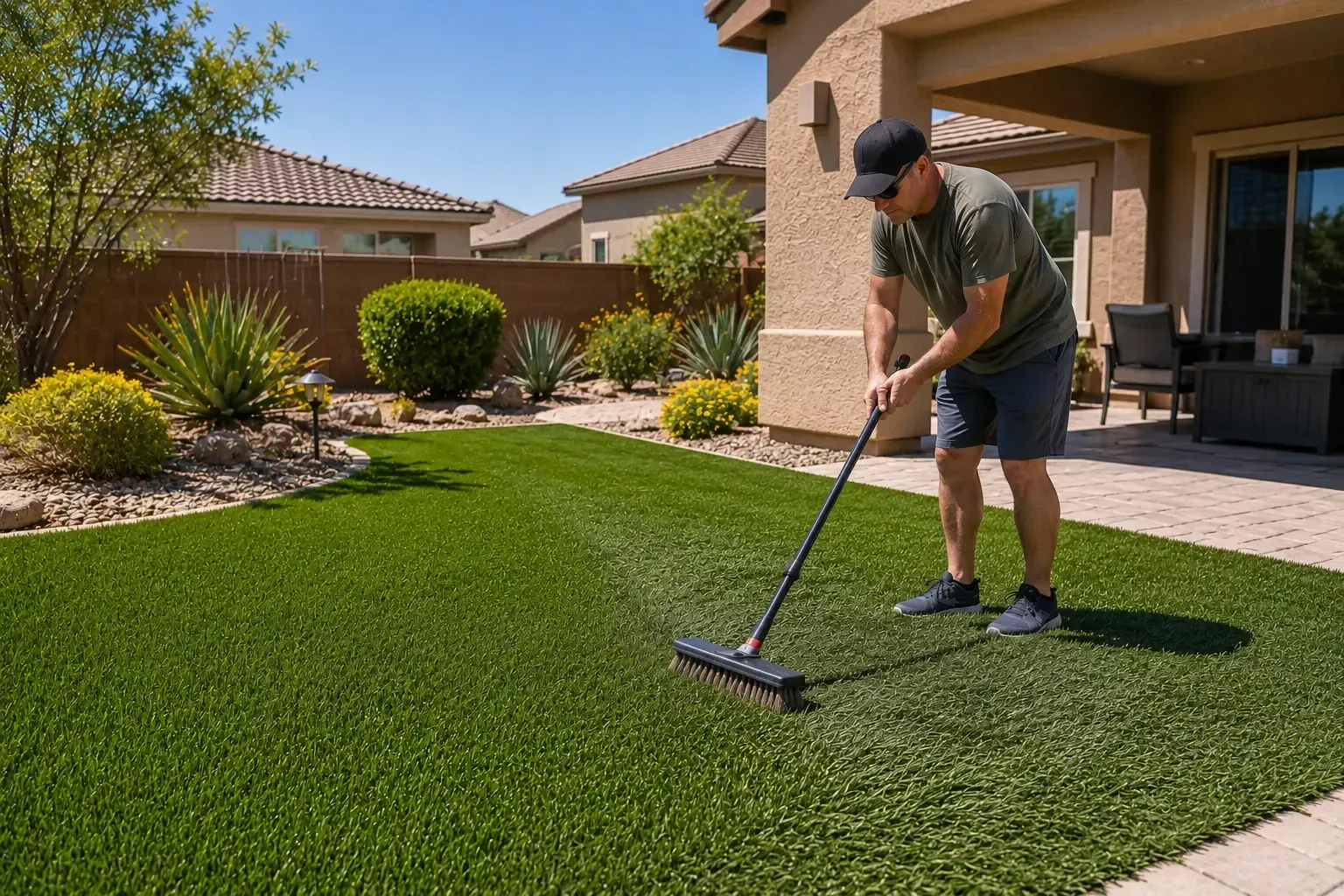
You need a stiff-bristled synthetic broom or a specialized power broom. Do not use metal rakes. Metal rakes tear at the fibers and can pull them out of the backing. You want to brush against the grain. Look at your lawn from the side. You will see the blades lean slightly in one direction. Brush the opposite way. This "blooms" the turf, pulling the infill back up and forcing the blades into a vertical position. This doesn't just look better; it allows the infill to do its job of cushioning the backing from UV rays. If you’re feeling overwhelmed by the physical labor, browsing Our Main Services will show you how professionals handle the heavy lifting with industrial-grade equipment.
Power brushing is the gold standard. A manual broom is fine for a small 10x10 dog run, but for a full yard, it’s a workout that most people give up on after ten minutes. Professional Turf Maintenance services use machines with high-speed cylindrical brushes. These machines don't just stand the grass up; they also "fluff" the infill. This prevents the sand or rubber from becoming a solid, concrete-like slab under your feet. Soft turf is safe turf. Hard turf is a trip hazard and an eyesore.
The Microbiology of the "Dog Patch"
If you have pets, your maintenance needs just tripled. Period. There is no such thing as "pet-friendly" turf that requires no cleaning. While the blades themselves don't absorb urine, the infill certainly does. If you use standard silica sand, that sand acts like a sponge for uric acid. As the water in the urine evaporates, the acid turns into crystals. These crystals trap odors. On a hot day, those odors are released. It’s the "locker room" smell that plagues so many backyard installations.
Rinsing makes this worse. It spreads the urine crystals across a wider area of the backing. What you need is an enzymatic cleaner. These are bio-engineered solutions that actually eat the proteins in the waste. They don't just mask the smell with a "fresh scent" perfume; they eliminate the source of the odor. You should be applying these treatments at least once a month if you have a large dog. For multiple dogs, every two weeks is the standard for a professional-grade environment. We take this seriously at LFL Henderson Artificial Turf, and you can learn more about our commitment to quality on the About Us page.
Beyond the smell, there is the issue of bacteria. Synthetic grass is a surface. Like any surface, it can host microbes. While it isn't a natural habitat for most lawn pests, the combination of organic debris (leaves, skin cells, pet waste) and moisture can create a biofilm. This is especially true in shaded areas that stay damp longer. An antimicrobial infill can help, but it isn't a silver bullet. Regular deep cleaning with a turf-safe disinfectant is necessary to keep the area safe for children and pets to crawl on. If you’ve noticed a lingering scent or a "tacky" feeling on the grass, it’s time to call a local Artificial Turf service for a deep extraction clean.
Infill: The Secret Ingredient You’re Ignoring
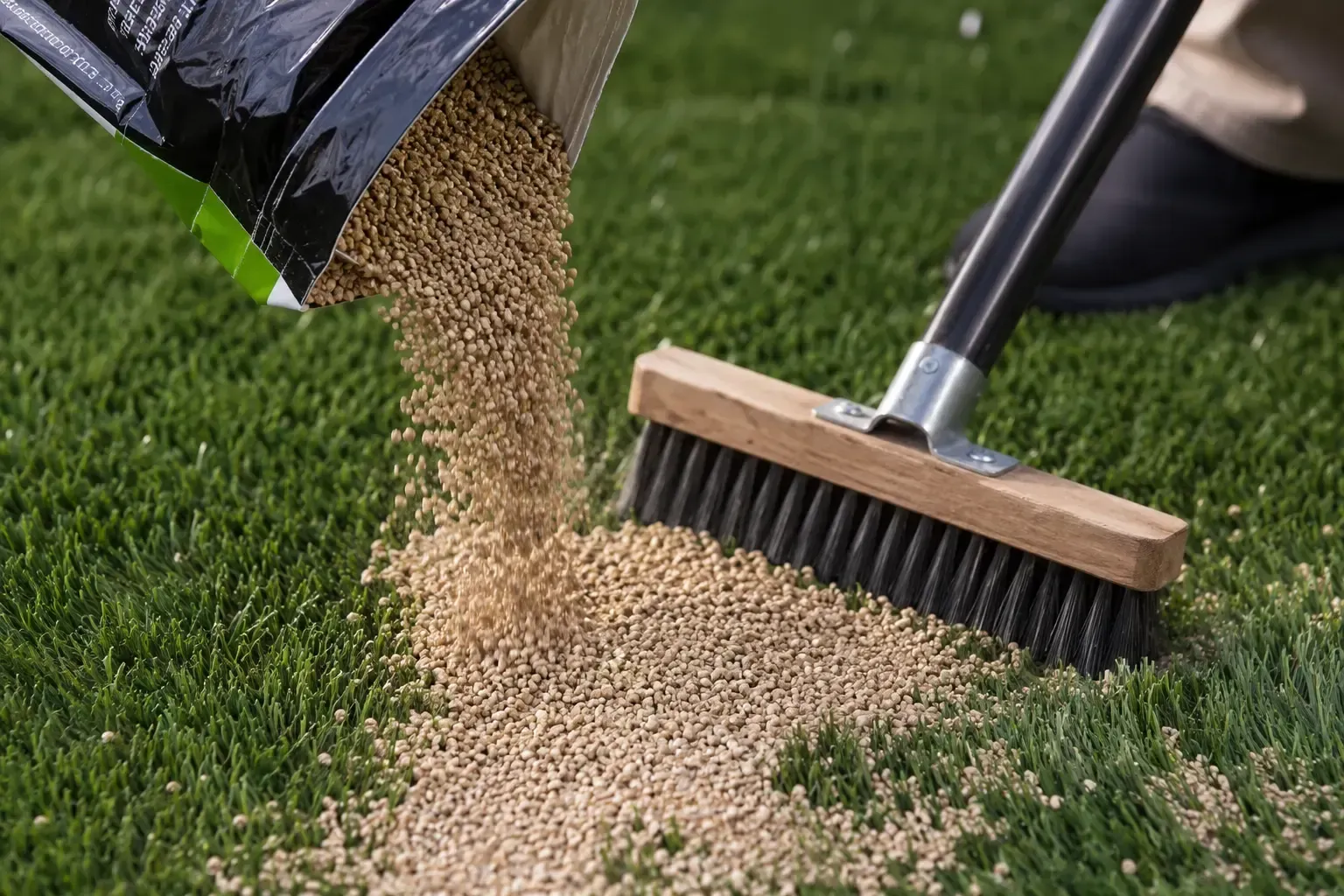
Infill is the material—usually sand, coated silica, or crumb rubber—that sits between the blades. It serves three purposes: it weighs the turf down so it doesn't wrinkle, it protects the backing from the sun, and it keeps the blades standing up. Most homeowners don't realize that infill is a consumable. It washes away. It gets tracked into the house. It compacts. If your infill levels are low, your turf is at risk.
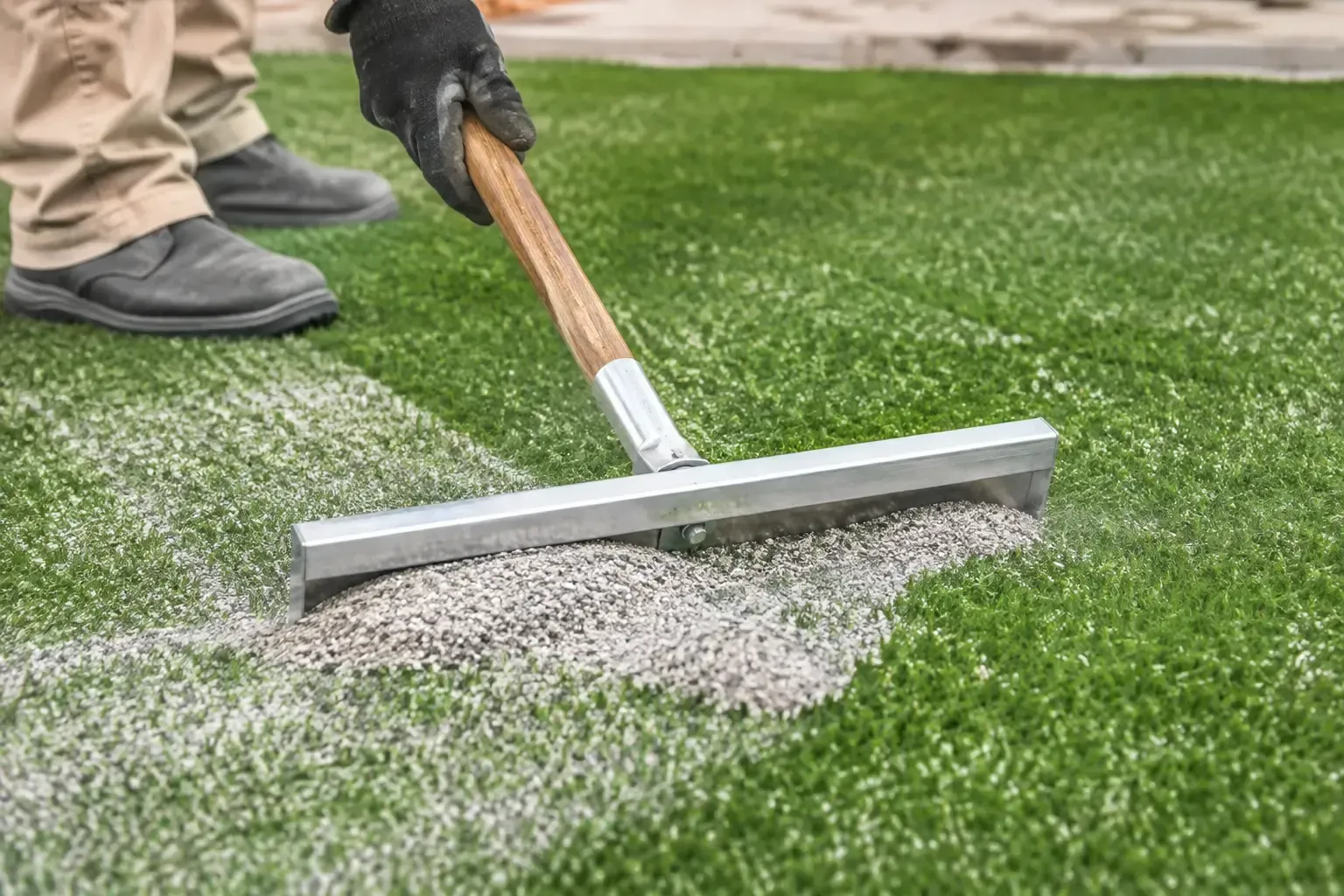
Check your infill levels annually. You should not be able to see the "roots" of the grass or the black backing material. If you can, you need to top it off. But don't just dump any sand on there. Play sand from a big-box store is too fine; it will clog your drainage holes. You need sub-angular silica sand or specialized antimicrobial granules. Using the wrong infill can void your warranty and turn your lawn into a dusty mess. This is a technical detail that many DIYers get wrong, leading to costly repairs later. The right infill also keeps the lawn cooler. Some modern infills are designed to retain moisture and release it slowly through evaporation, lowering the surface temperature by up to 20 degrees.
When we talk about Turf Maintenance services, infill replenishment is usually the most overlooked component. A pro will use a drop spreader to ensure an even distribution. If you have high-low spots in your infill, the turf will wear unevenly. You’ll get "bald spots" where the blades have been crushed because there wasn't enough sand to support them. Think of infill like the oil in your car. You can run without it for a bit, but eventually, the whole system is going to seize up.
Seasonal Challenges and the Nevada Heat
In Henderson, we deal with extreme heat. This poses a unique challenge for an Artificial Lawn. While the turf won't die like real grass, it can reach temperatures that make it uncomfortable to walk on. More dangerously, "melting" is a real phenomenon. This happens when sunlight reflects off high-efficiency (Low-E) windows and onto the turf. The glass acts like a magnifying lens, concentrating the beam and melting the plastic fibers. This isn't a product defect; it’s a physics problem.
Maintenance in the summer involves more than just cleaning; it involves temperature management. On 110-degree days, a quick misting can drop the temperature of the turf significantly for a short period. However, for long-term protection, you might need to install window screens or awnings to prevent those "hot spots." If the damage is already done, a local Artificial Turf service can often cut out the melted section and seam in a new piece. It’s a surgical procedure for your yard, and when done correctly, it’s invisible.
Winter brings its own issues. While we don't get much snow, we do get wind and organic debris. Fallen leaves and twigs shouldn't be left to rot on the turf. As they break down, they turn into compost. Compost is great for a garden, but it’s terrible for synthetic grass. It creates a soil layer that allows weeds to grow right on top of your turf. Use a leaf blower on a low setting or a plastic rake to keep the surface clear. Never use a metal shovel if we do get a rare frost; you’ll slice the backing as easily as a hot knife through butter.
The DIY vs. Professional Maintenance Debate
Can you maintain your own turf? Yes. Will you do it as well as a professional? Probably not. The equipment is the difference-maker. A homeowner typically has a hose, a rake, and maybe a leaf blower. A professional local Artificial Turf service brings a specialized arsenal. We're talking about high-powered vacuums that suck out the old, compacted infill, industrial power brooms, and hospital-grade disinfectants that are safe for the environment but lethal to odor-causing bacteria.
Think of it like detailing a car. You can wash your car in the driveway every Sunday, and it will look "clean." But once a year, you take it to a pro for a deep wax, interior extraction, and engine clean. That’s what keeps the car looking brand new for a decade. Your lawn is the same. A professional "refresh" once or twice a year can add five to seven years to the lifespan of your Artificial Lawn. It’s an investment in your property value. If you’re ready to see the difference a pro makes, Contact Us to schedule a consultation.
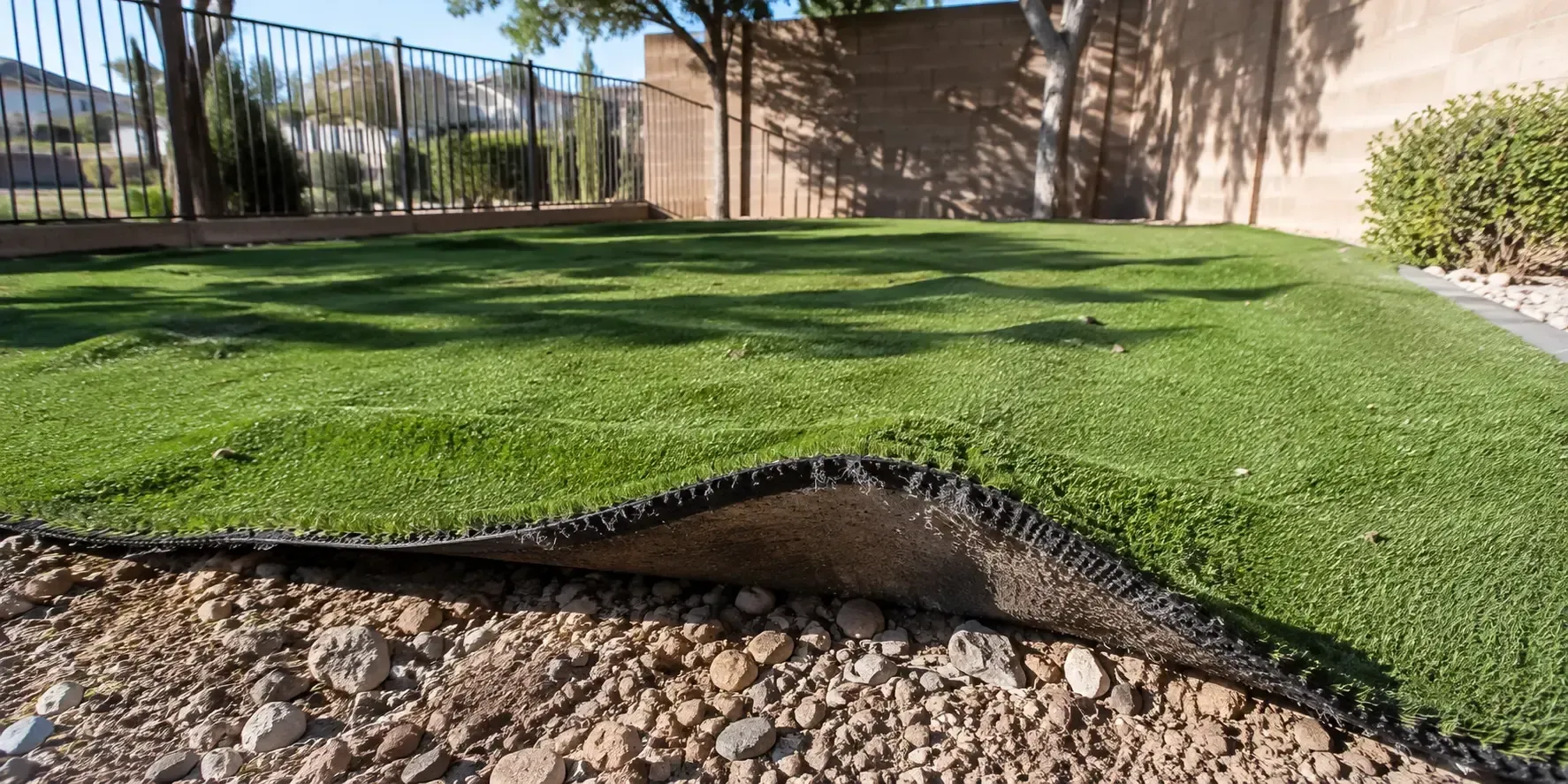
Professional services also include a "seam check." Over time, the glue or staples holding the sections of turf together can fail due to ground shifts or extreme heat. If a seam opens up, it’s a trip hazard and a point of entry for weeds. A pro will catch these tiny gaps before they become massive tears. They will also check the perimeter securement. In high winds, loose edges can catch the air and "sail," causing the entire installation to shift and wrinkle. Once turf is wrinkled, it is incredibly difficult to flatten out again without professional stretching tools.
The ROI of Proper Care
Let's talk numbers. A high-quality artificial turf installation is not cheap. You are looking at a significant upfront cost. If you neglect it and have to replace it in seven years, your cost per year is astronomical. If you maintain it and it lasts twenty years, it is one of the smartest financial moves a homeowner can make. You save on water bills, mower gas, fertilizers, and, most importantly, your time. But those savings only materialize if the product lasts.
Ignoring maintenance is effectively throwing money away. A lawn that is matted and smelly reduces your home's curb appeal. If you ever decide to sell, a potential buyer will see a neglected Artificial Lawn as a liability—a project they have to tear out and replace. A vibrant, clean, and upright lawn, however, is a selling point that commands a premium. It’s an outdoor living room. Treat it with the same respect you give your interior flooring.
Moreover, consider the environmental impact. The most "green" thing you can do with your synthetic lawn is to make it last as long as possible. Manufacturing and shipping these materials has a carbon footprint. Every year you extend the life of your current yard is a year you keep plastic out of the landfill and reduce the demand for new production. Maintenance is an act of sustainability. It’s not just about looking good; it’s about being a responsible property owner.
Advanced Cleaning Techniques: Beyond the Basics
For those who want to go the extra mile, there are specialized techniques for deep-cleaning. One such method is the "magnetic sweep." If you’ve had construction done recently, or if you have kids who lose things, a magnetic sweep can pull out nails, screws, and metallic debris that have fallen deep into the fibers. You won't see them, but your bare feet will certainly feel them eventually. This is a standard part of our Turf Maintenance services for post-construction cleanups.
Another technique is "oxygenated pressure washing." This isn't your standard high-pressure blast, which can actually damage the turf backing. Instead, it uses a low-pressure stream infused with oxygen-based cleaners. These bubbles penetrate the infill and lift out deep-seated oils and grime. Think of it like an OxiClean for your yard. It’s particularly effective for removing the sticky residue left behind by certain trees or sap-dropping plants. If you have pine trees or oaks near your turf, this is a must-have service.
Finally, there is the "cooling treatment." Certain topical applications can be sprayed onto the turf to create a more reflective surface on a microscopic level. These don't change the color of the grass, but they do help bounce some of the IR radiation away, keeping the surface slightly cooler during the peak of a Nevada summer. It’s a cutting-edge addition to the local Artificial Turf service menu that is becoming increasingly popular in the desert southwest.
Common Mistakes to Avoid
Don't use a power washer on high settings. You will blast the infill right out of the turf and potentially puncture the backing material. Don't use harsh chemicals like bleach or acidic cleaners. These can break down the UV stabilizers in the plastic, causing the grass to turn brittle and fade in the sun. If it’s not labeled as turf-safe, keep it away from your lawn.
Don't ignore the weeds. Yes, weeds can grow in artificial grass. They don't usually grow from the bottom up (through the weed barrier), but rather from the top down. Seeds blow into the infill, find a bit of moisture, and take root. If you see a weed, pull it immediately. If you let it grow, the roots can weave into the backing, making it much harder to remove without causing damage. A gentle, turf-safe herbicide can be used if you have a widespread problem, but manual removal is always best.
Don't park vehicles on your turf. Artificial grass is tough, but it isn't designed for the weight and heat of a car engine or the sheer force of turning tires. This will cause permanent crushing and can even tear the turf away from its anchor points. If you have a boat or a trailer, keep it on the driveway or a designated gravel pad. Your turf is for feet and paws, not tires and oil leaks.
Conclusion: The Path to a Forever Lawn
Maintaining an Artificial Lawn isn't a Herculean task, but it does require consistency. It’s the difference between a yard that looks like a plastic carpet and one that looks like a pristine, manicured estate. Rinse for dust, brush for life, and treat for odors. That is the trinity of turf care. When you follow these steps, you aren't just cleaning; you are preserving an asset.
At LFL Henderson Artificial Turf, we pride ourselves on being more than just installers. We are partners in your home’s long-term beauty. Whether you need a one-time deep clean or a regular maintenance schedule, we have the expertise to keep your outdoor space looking its best. Don't wait until the smell is unbearable or the blades are flat as a pancake. Take action now to protect your investment and enjoy a lush, green vista every single day of the year.
Frequently Asked Questions
How often should I professionally clean my artificial turf?
For most residential yards, a professional deep clean and "refresh" is recommended once or twice a year. However, if you have multiple large dogs or high foot traffic, quarterly Turf Maintenance services are ideal to prevent odor buildup and fiber compaction. Regular professional care can significantly extend the lifespan of your lawn.
Can I use a regular vacuum on my artificial grass?
No, you should never use a standard household vacuum on artificial turf. The suction can pull up the infill material, which is essential for protecting the backing and keeping blades upright. Additionally, household vacuums aren't designed for outdoor moisture or debris, which can damage the machine's motor and filters quickly.
Why does my artificial lawn smell like dog urine even after I rinse it?
Rinsing often only moves the urine deeper into the infill or spreads it across the backing. The odor comes from uric acid crystals that don't dissolve in water alone. To eliminate the smell, you must use an enzymatic cleaner specifically designed for Artificial Lawn use, which breaks down the organic proteins causing the odor.
Is it possible to repair melted spots on artificial turf?
Yes, melted spots caused by window reflections or hot coals can be repaired. A local Artificial Turf service can cut out the damaged section and "patch" it with a new piece of the same turf. While a professional can make this nearly invisible, it's best to address the source of the reflection to prevent future damage.
Does artificial grass get too hot for dogs' paws?
In peak summer temperatures, artificial turf can become very hot. To keep it safe for pets, we recommend using cooling infills, providing shaded areas, or quickly misting the turf with water to lower the surface temperature before they go out. Always check the temperature with your hand before letting pets play on it during a heatwave.