Artificial Turf Drainage in the Desert: Questions to Ask Your Installer
Proper artificial turf drainage is essential for protecting your Henderson landscape from sudden monsoon downpours and hard desert soil conditions. By asking your installer specific questions about base materials, grading plans, and turf backing, you can ensure your yard remains dry, odor-free, and structurally sound. A customized water management plan prevents costly future repairs and extends the lifespan of your synthetic lawn.
- Always ask your contractor about their specific grading plan to ensure water flows away from your home foundation.
- Pet owners must request fully permeable turf backing and odor-trapping infill to manage heavy liquid flow.
- Local expertise is crucial, as contractors must understand how to manage native Nevada caliche soil during excavation.
Southern Nevada is famous for its dry climate. Henderson experiences long stretches of intense heat and minimal rainfall. However, desert weather is highly unpredictable. When the summer monsoon season arrives, heavy rain falls fast and hard.
Desert soil presents a unique challenge for homeowners. The hard, compacted dirt does not absorb water easily. Flash floods can occur in a matter of minutes. If you are upgrading your landscaping, you must plan for these sudden downpours. A beautiful new yard can quickly turn into a stagnant swamp if water has nowhere to go.
Proper water management protects your investment. You need a yard that looks great and functions perfectly year after year. When consulting with contractors, you must ask specific, targeted questions. This ensures your project is built to handle the local climate.
Why Synthetic Lawn Drainage Matters in the Desert
Many homeowners assume fake grass requires no water management. This is a costly misconception. Synthetic lawn drainage is a critical component of any successful installation.
Water must flow through the surface and away from your property. If water sits beneath your grass, it causes severe problems. Standing water breaks down base materials over time. It creates a breeding ground for mold, mildew, and bacteria. In severe cases, poor water management can compromise your home foundation.
Henderson yards often feature caliche. This is a layer of soil particles cemented together by calcium carbonate. It is essentially natural concrete. Water cannot pass through solid caliche. Installers must account for this hardpan layer during the excavation process. If they ignore it, your yard will flood during the next heavy storm.
Key Questions for Your Contractor
Before signing a contract, you must vet your installation team. Do not just look at grass samples. Dig deeper into their construction methods. Ask the following questions to verify their expertise.
Ask About Base Materials and Soil Preparation
The surface grass is only the cosmetic layer. The true strength of your yard lies underneath. A durable base layer prevents wrinkles, sinking, and flooding.
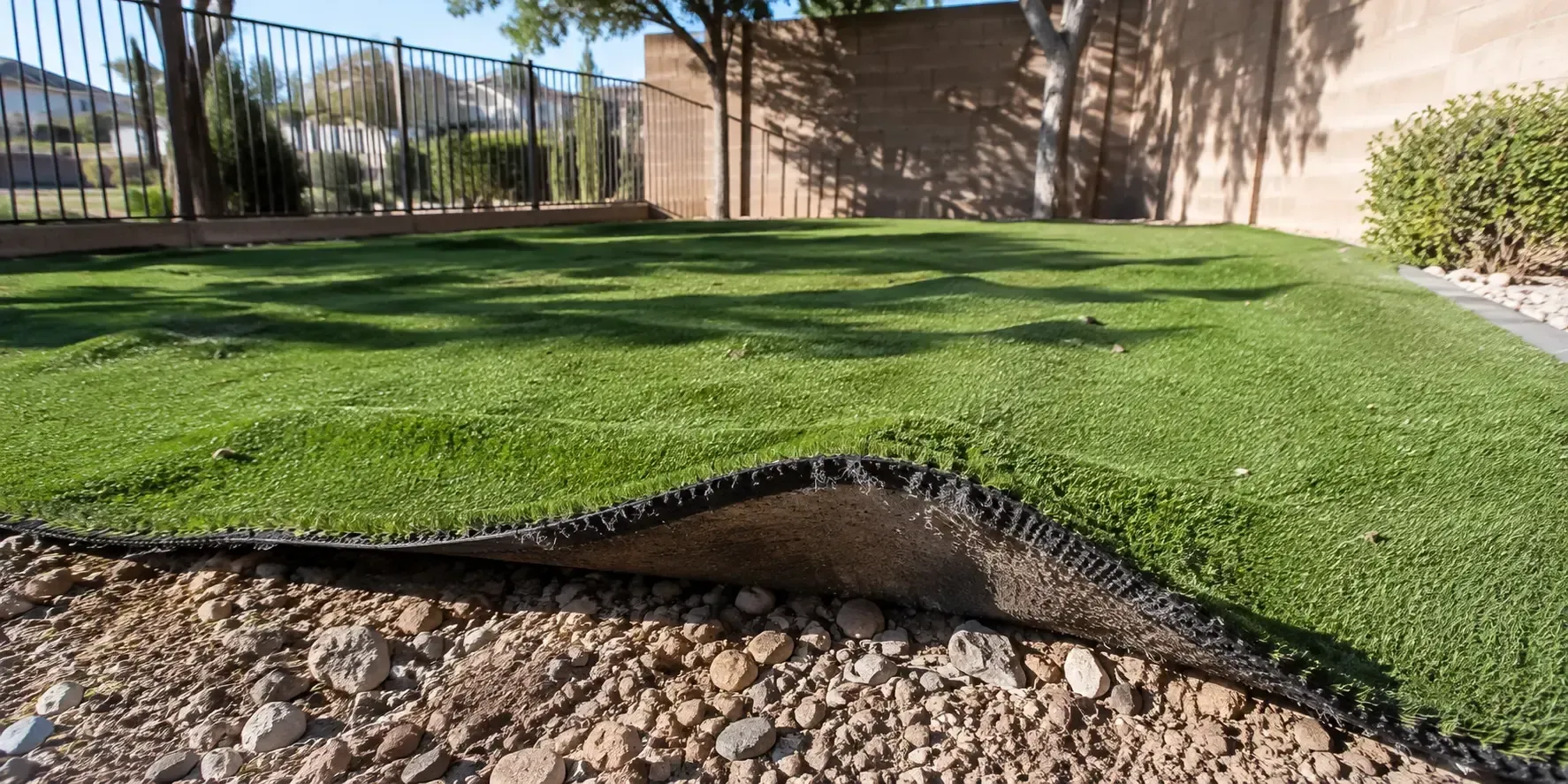
Ask your installer what type of base material they use. High-quality installations require crushed aggregate rock. This material is often called Class II road base. The crushed rock creates a stable, porous foundation. It allows rainwater to seep through the gaps between the stones.
Installers must compact this rock layer properly. If the base is too loose, the ground will shift. If it is compacted with the wrong materials, water cannot penetrate it. A knowledgeable contractor will explain their exact compaction ratio. They should also detail how much natural dirt they plan to excavate. Proper excavation depth is essential. You can learn more about how Henderson yard conditions shape an artificial turf project by understanding local soil profiles.
Ask How Artificial Turf Drainage is Planned for Henderson Yards
Every property is unique. A generic installation approach will fail. You must ask how artificial turf drainage is planned for Henderson yards specifically.
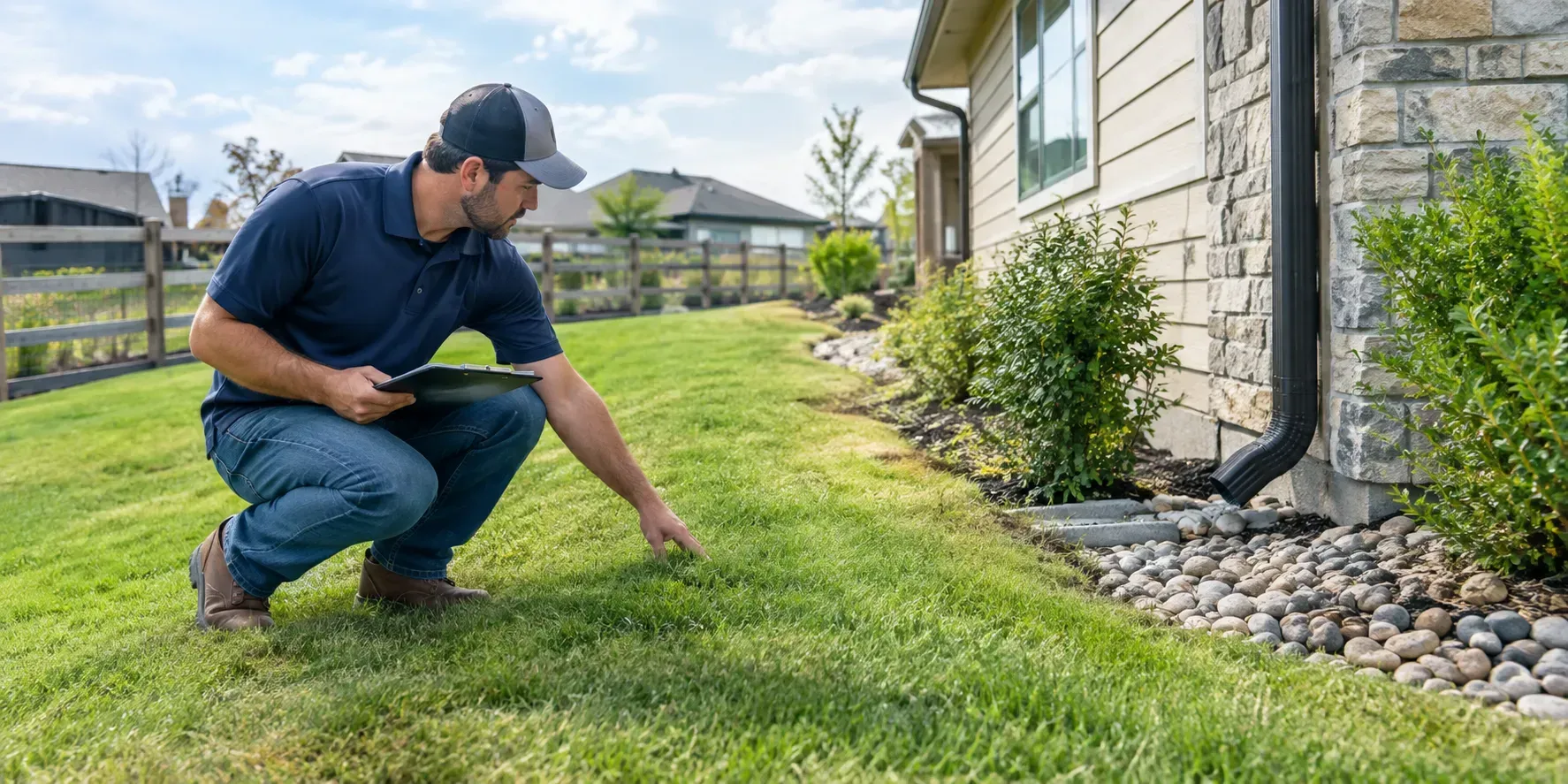
Your contractor should provide a clear grading plan. Grading refers to the slope of your yard. The ground must slope away from your house. A standard slope drops about one inch for every four feet of distance. This slight angle forces gravity to pull water away from your foundation.
In some cases, a simple slope is not enough. Your yard might be completely flat. It might be surrounded by concrete walls. In these situations, your contractor must install active water management systems. They might suggest installing a French drain. This is a trench filled with gravel and a perforated pipe. The pipe captures excess water and redirects it to the street. Ask if trenching or dry wells are necessary for your specific layout.
Ask About Pet-Specific Drainage Systems
Dog owners must pay special attention to water flow. Pet urine contains high levels of ammonia. If urine gets trapped beneath the grass, the odor becomes unbearable in the desert heat.
Standard installations are not always sufficient for multiple dogs. You need a system designed for rapid liquid transfer. Ask your contractor if they use fully permeable turf backing. This material allows liquid to pass through every square inch of the surface.
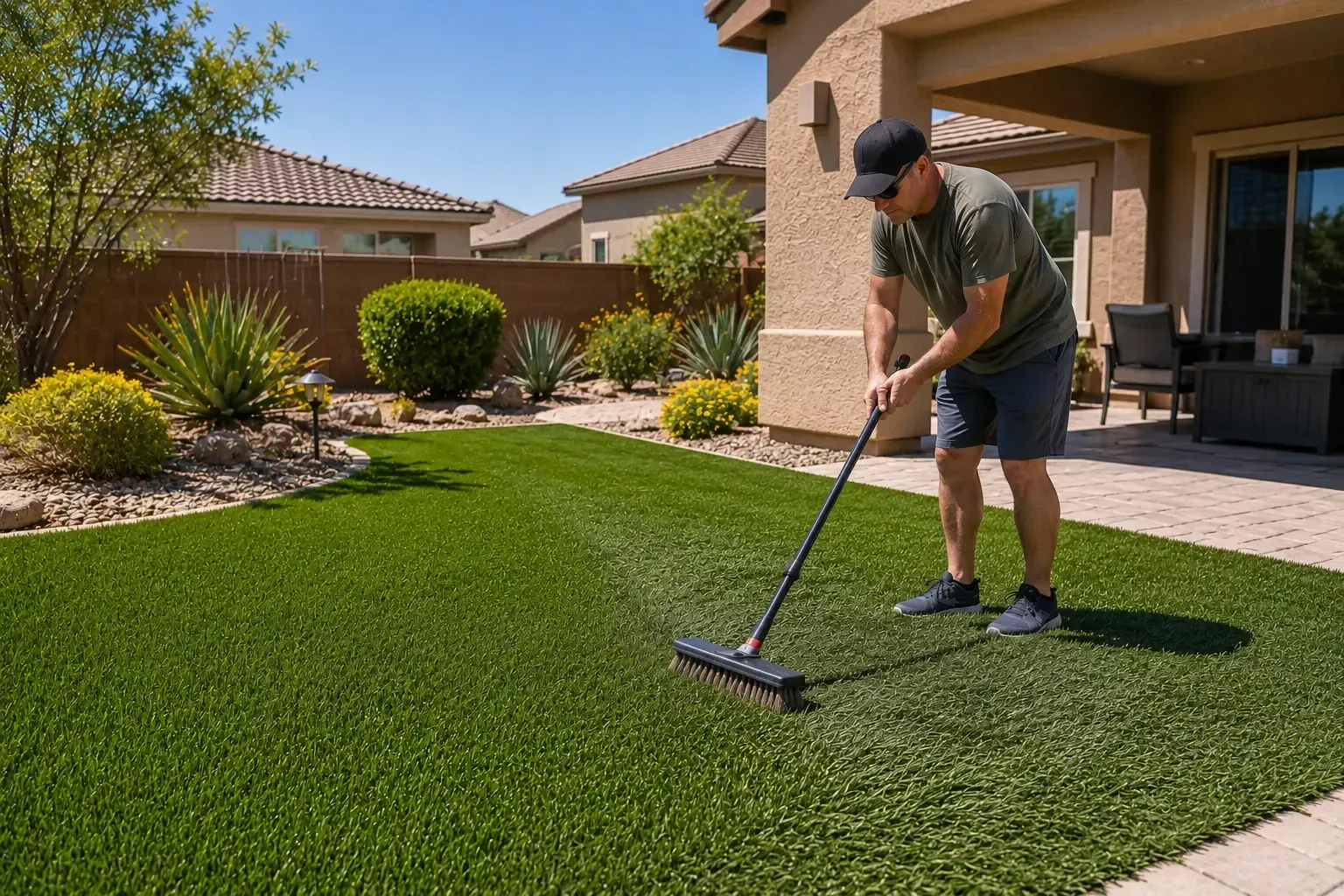
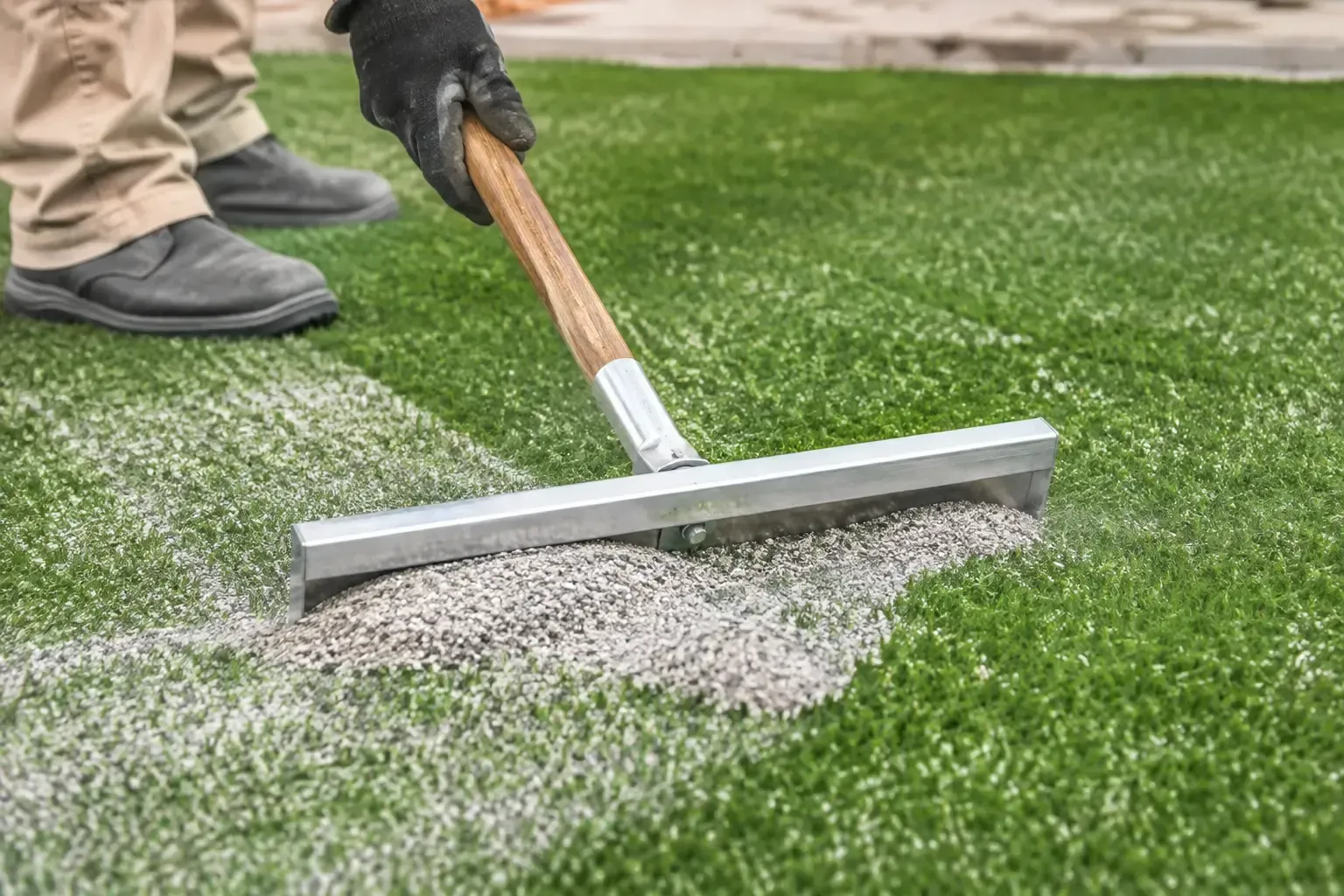
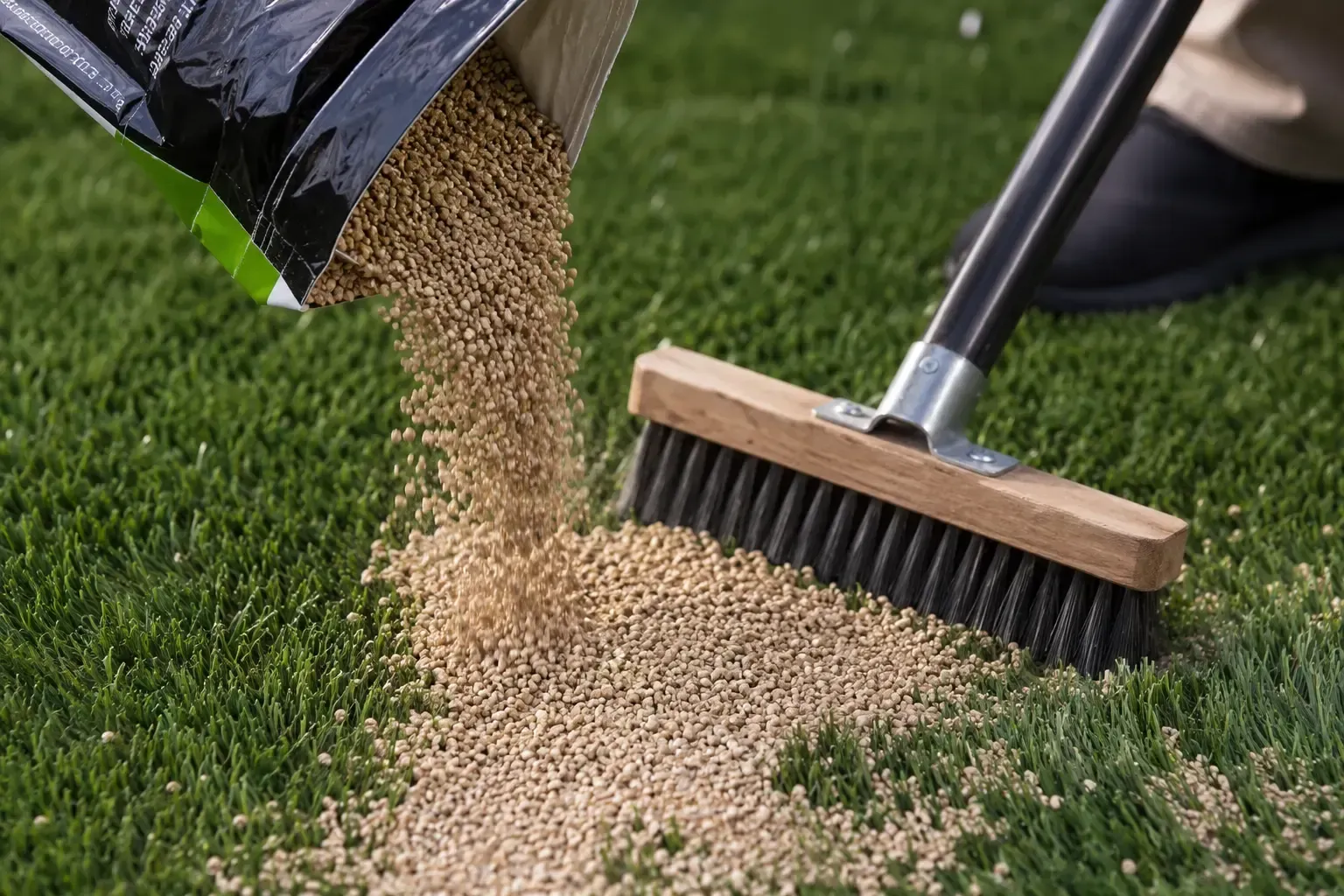
You should also ask about specialized infill. Standard silica sand traps moisture and odors. Antimicrobial infills, like coated zeolite, capture ammonia gases. When you rinse the grass with a hose, the water flushes the trapped urine into the earth. Upgrading your yard for pets requires precise planning. Explore dedicated residential artificial turf options to keep your yard smelling fresh.
Comparing Turf Backing Options
The backing is the material holding the grass blades together. It plays a massive role in how fast water moves through the system. You have several options to choose from. Review this comparison table to understand the differences.
| Backing Type | Drainage Method | Permeability Rate | Best Application |
|---|---|---|---|
| Standard Urethane | Hole-Punched | 30 to 40 inches per hour | General landscaping, low traffic |
| Fully Permeable | Woven Fleece | 400+ inches per hour | Pet runs, high moisture areas |
| Latex Coated | Hole-Punched | 20 to 30 inches per hour | Budget projects, indoor use |
| Hybrid Mesh | Multi-Layer Perforation | 100 to 150 inches per hour | Sports fields, playgrounds |
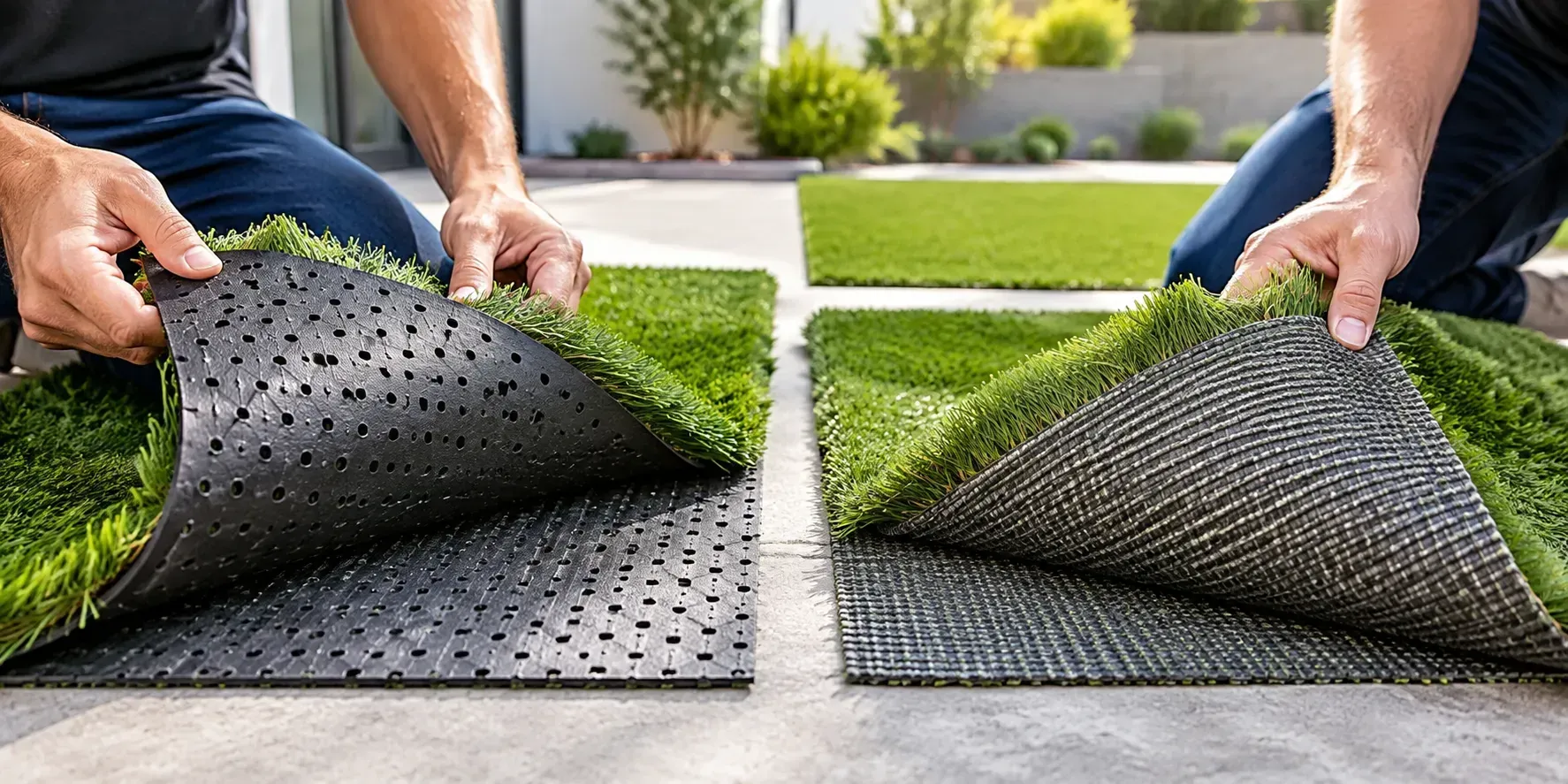
Standard urethane uses punched holes spaced a few inches apart. Water must travel across the backing to find a hole. Fully permeable backing drains instantly. It functions like a massive filter. Choosing the right backing prevents puddles and extends the life of your lawn. Ask your contractor which backing is attached to your preferred grass style.
Commercial vs. Residential Drainage Needs
Scale matters when planning a landscape project. The rules change when you install grass on a massive property.
Homeowners usually deal with small, enclosed backyards. The goal is to protect the house and keep the area dry. Commercial properties face different challenges. Schools, sports facilities, and shopping centers see massive foot traffic. This constant weight compresses the sub-base layer over time. If the base compresses too much, the rock pores close. Water can no longer pass through.
Commercial installers must use specialized stabilization fabrics. They often install deep trench drains along the perimeter of the property. Property managers cannot afford standing water. Puddles create slip hazards and liability risks. If you are managing a large-scale property, ensure your contractor understands heavy-duty grading. You can view specific solutions for commercial artificial turf to ensure safety and compliance. Every project type requires a tailored approach. Check out our full list of services for various application methods.
Evaluating Artificial Turf Drainage Henderson Installations
Local experience is non-negotiable. A contractor from a rainy, coastal climate will not understand desert soil. You need experts who handle Nevada terrain daily.
When evaluating artificial turf drainage Henderson installations, demand local references. Ask to see projects they completed two or three years ago. A newly installed yard always looks perfect. The true test comes after a few monsoon seasons. A properly installed yard will look just as flat and pristine after heavy storms.
You should also review the warranty terms. Ask what happens if the yard floods. A reputable company stands by their grading and base work. They will fix sinking or pooling issues caused by installation errors. Partnering with a trusted local company guarantees peace of mind. Learn more about how dedicated local teams protect your landscape investment.
Preparing Your Yard for Success
Your landscape is an extension of your home. It provides a space to relax, play, and entertain. You deserve a yard that remains flawless through heatwaves and heavy rain.
Do not rush the planning phase. Take the time to ask hard questions. Demand detailed explanations about base materials, grading angles, and backing types. A great contractor will gladly share their technical knowledge. They want you to understand the value of a job done right.
Proper planning saves you thousands of dollars in future repairs. If you are ready to upgrade your property, work with seasoned professionals. Reach out to the experts at LFL Henderson Artificial Turf to discuss your specific needs. Our team understands exactly how to manage desert soil. Call us directly at 725-888-8813 to schedule a thorough site evaluation. You can also reach out through our contact page to get started on your custom landscape design.
Frequently Asked Questions
Do I need a French drain under my artificial grass?
Not always. If your yard has a natural slope that directs water away from your home, a standard crushed rock base is usually enough. A French drain is only necessary for flat yards surrounded by hardscape or areas prone to heavy water pooling.
How fast does water drain through fake grass?
Standard hole-punched grass drains roughly 30 to 40 inches of water per hour. Fully permeable pet turf can drain over 400 inches per hour. Both rates easily handle typical Henderson rainfall if the sub-base is properly built.
Can poor drainage ruin my artificial turf warranty?
Yes. Standing water breaks down the backing materials and degrades the structural integrity of the base. If a third-party contractor installs the base incorrectly, the turf manufacturer may void the product warranty due to improper site preparation.