Backyard Putting Greens in Henderson: Design Choices That Affect Play
A backyard putting green provides an excellent way to improve your short game without leaving home. Careful planning regarding base compaction, turf materials, and realistic slope grading ensures a professional-level ball roll. Working with experienced local installers ensures your practice area withstands the desert heat while delivering country club performance.
- Proper base preparation and grading create realistic breaks and prevent surface bumps.
- Choosing the right pile height and silica sand infill allows you to match your home course's stimp speed.
- Adding fringe borders and organic shapes enhances both chipping practice and overall backyard aesthetics.
Serious golfers know that the short game dictates the scorecard. Practicing your putts and chips is vital for lowering your handicap. However, driving to a local course every day takes time. Building a dedicated practice area in your own yard solves this problem. The desert climate presents specific challenges for landscaping. High temperatures and dry conditions ruin natural grass greens. Synthetic materials provide the perfect solution for year-round practice.
Creating a functional practice area requires more than just unrolling green carpet. You must consider ball roll, slope, and base preparation. Every design choice impacts how the ball behaves. A poorly designed setup will hurt your game instead of helping it. The experts at LFL Henderson Artificial Turf understand these nuances. We design systems that mimic country club conditions right in your backyard.
Essential Steps for putting green installation Henderson
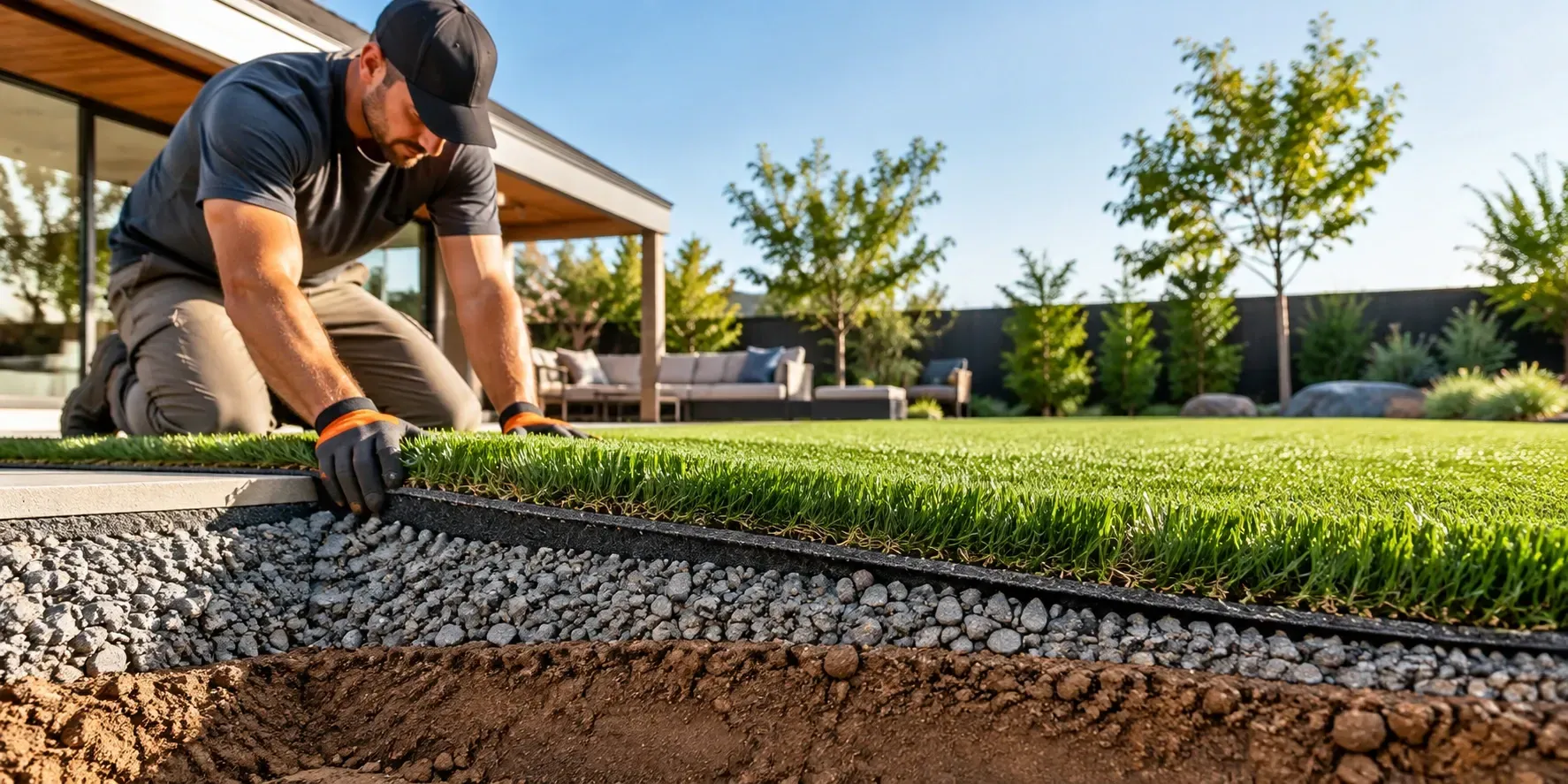
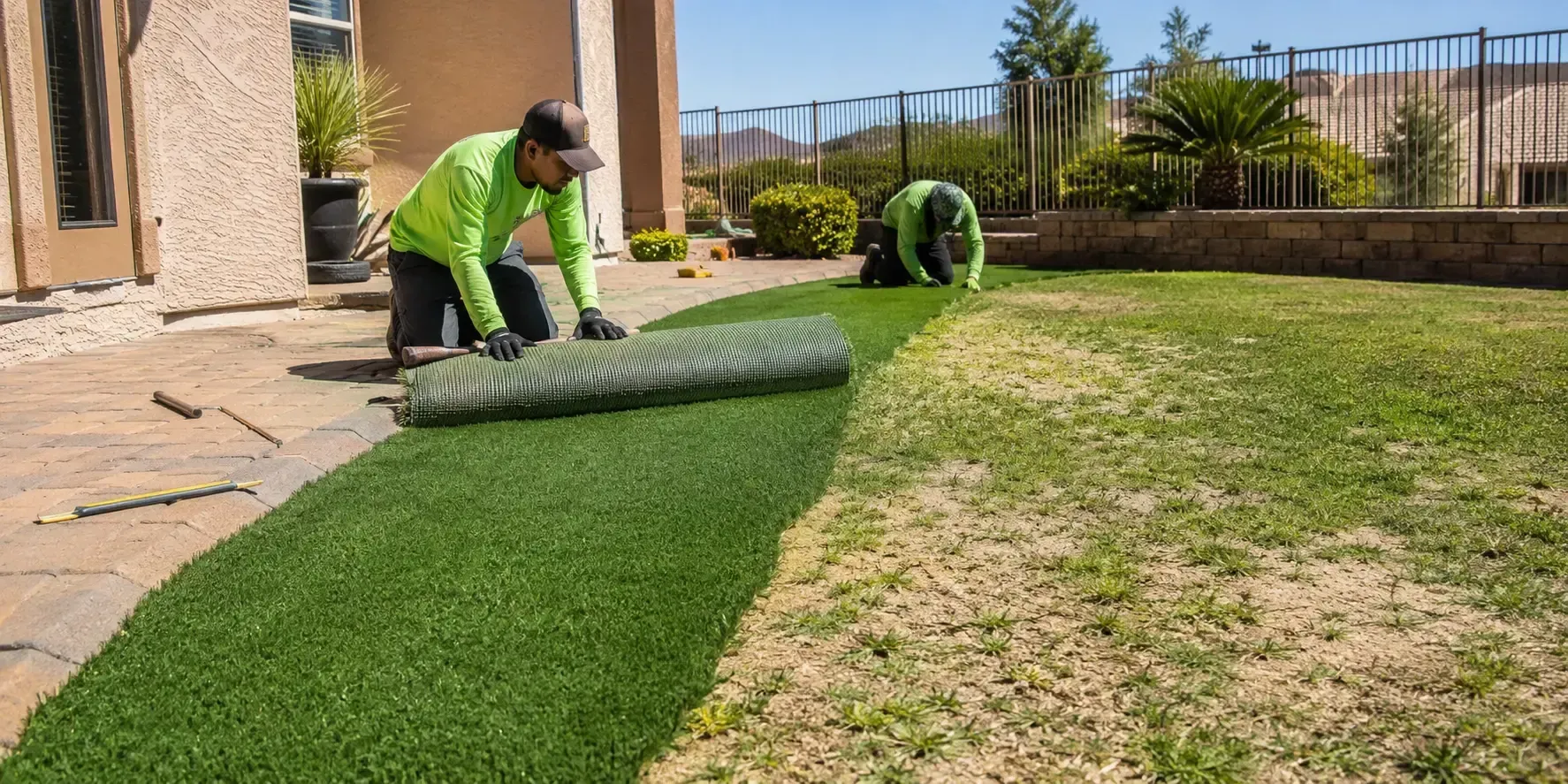
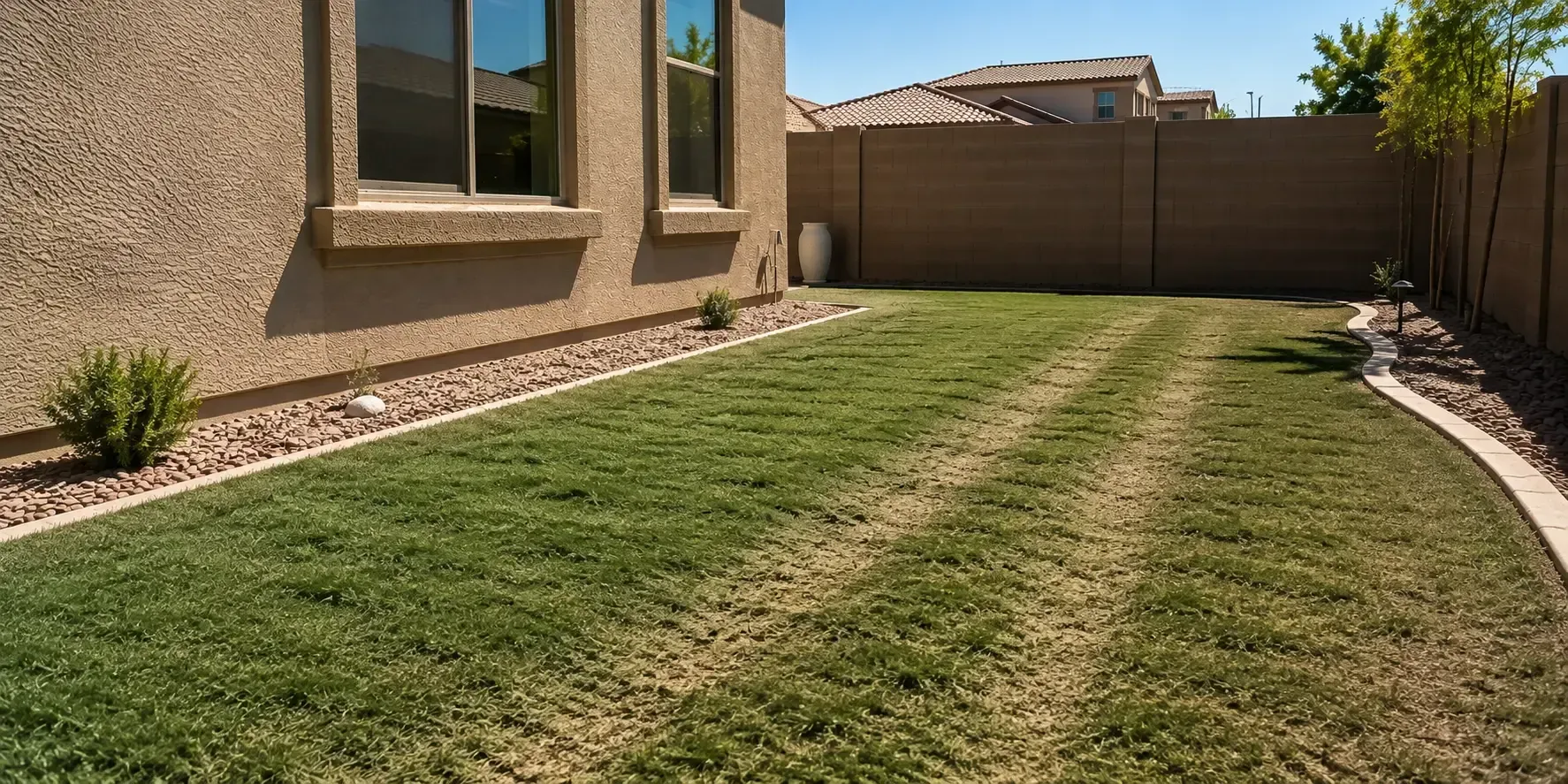
The foundation of any great practice area lies beneath the surface. You cannot see the base layer, but it controls everything. Natural soil in our region is often hard and rocky. This caliche soil requires careful excavation. We must remove enough dirt to build a proper foundation.
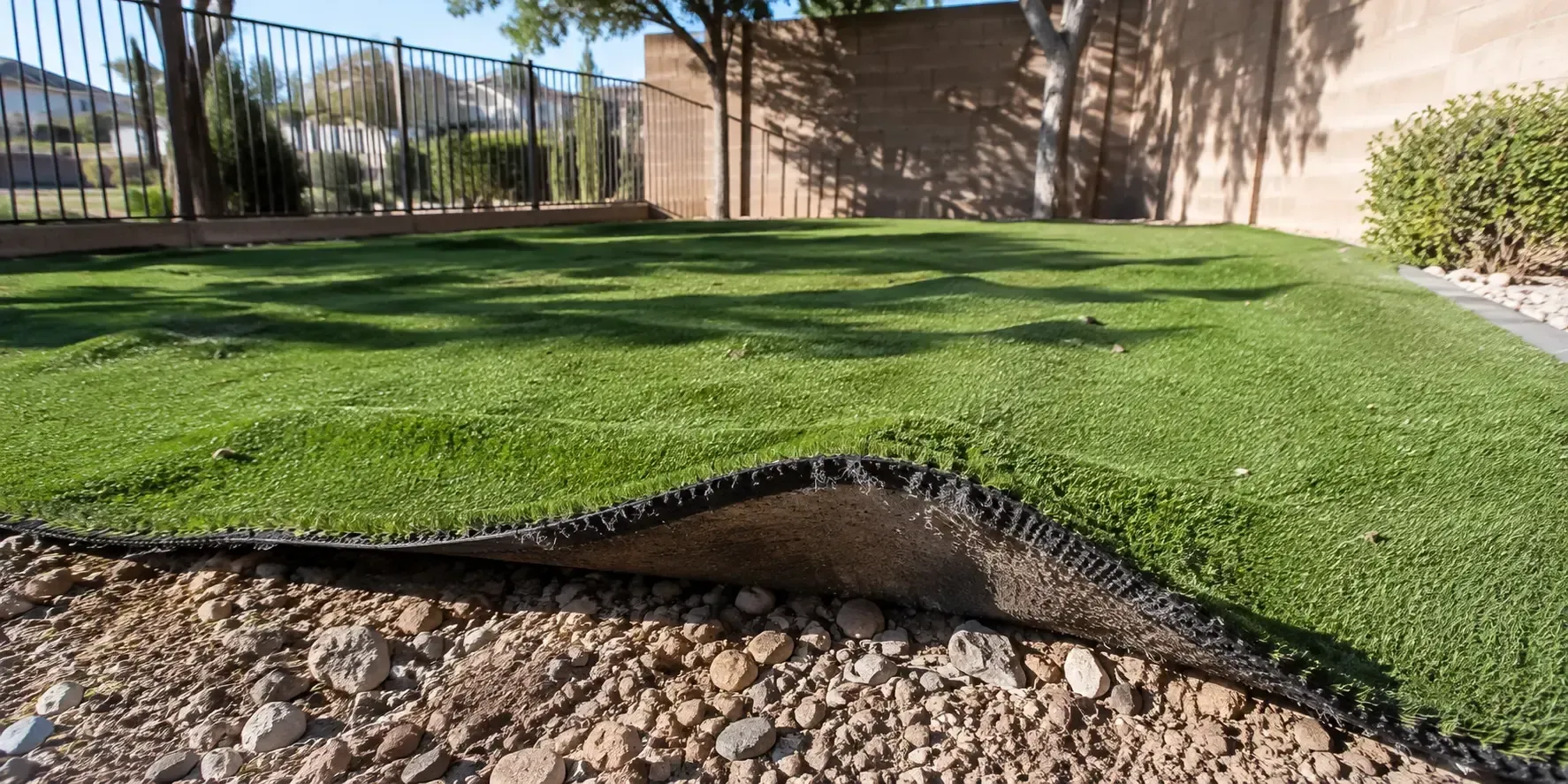
A standard installation requires several inches of crushed rock. This rock is compacted tightly to create a smooth surface. Compaction prevents the ground from shifting over time. If the base shifts, your practice area will develop unnatural bumps. Bumps ruin the accuracy of your putts.
Proper grading is another critical factor. A perfectly flat surface is easy to build. However, flat surfaces are boring for serious golfers. Real courses feature subtle breaks and undulations. We grade the crushed rock to create these realistic slopes. This allows you to practice uphill, downhill, and breaking putts.
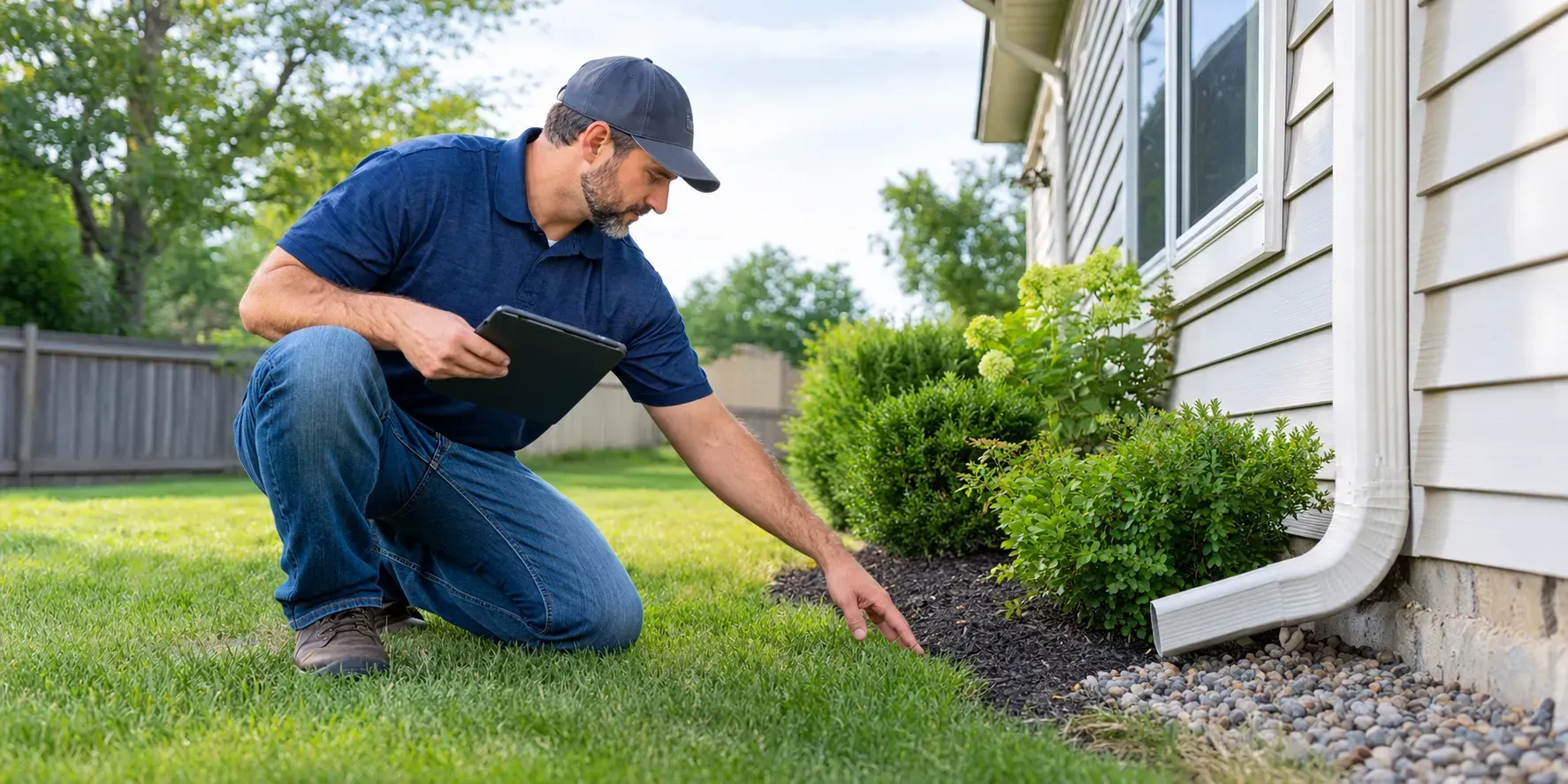
Drainage also plays a hidden role in the foundation. Even in a dry climate, occasional heavy rain happens. Water must flow away from the playing surface quickly. Proper grading pushes water toward the edges. We often recommend reviewing our guide on designing pet-friendly spaces with proper drainage if your yard serves multiple purposes.
Material Selection and Ball Roll Speed
The type of fiber you choose determines the speed of your putts. Golfers measure green speed using a tool called a Stimpmeter. A higher reading means a faster surface. Most professional courses aim for a reading between 10 and 12.
Different materials offer different speeds. Slit-film fibers are very popular for practice areas. These fibers lay flat and create a smooth path for the ball. Texturized nylon is another premium option. Nylon resists heat well and stands up to heavy traffic.
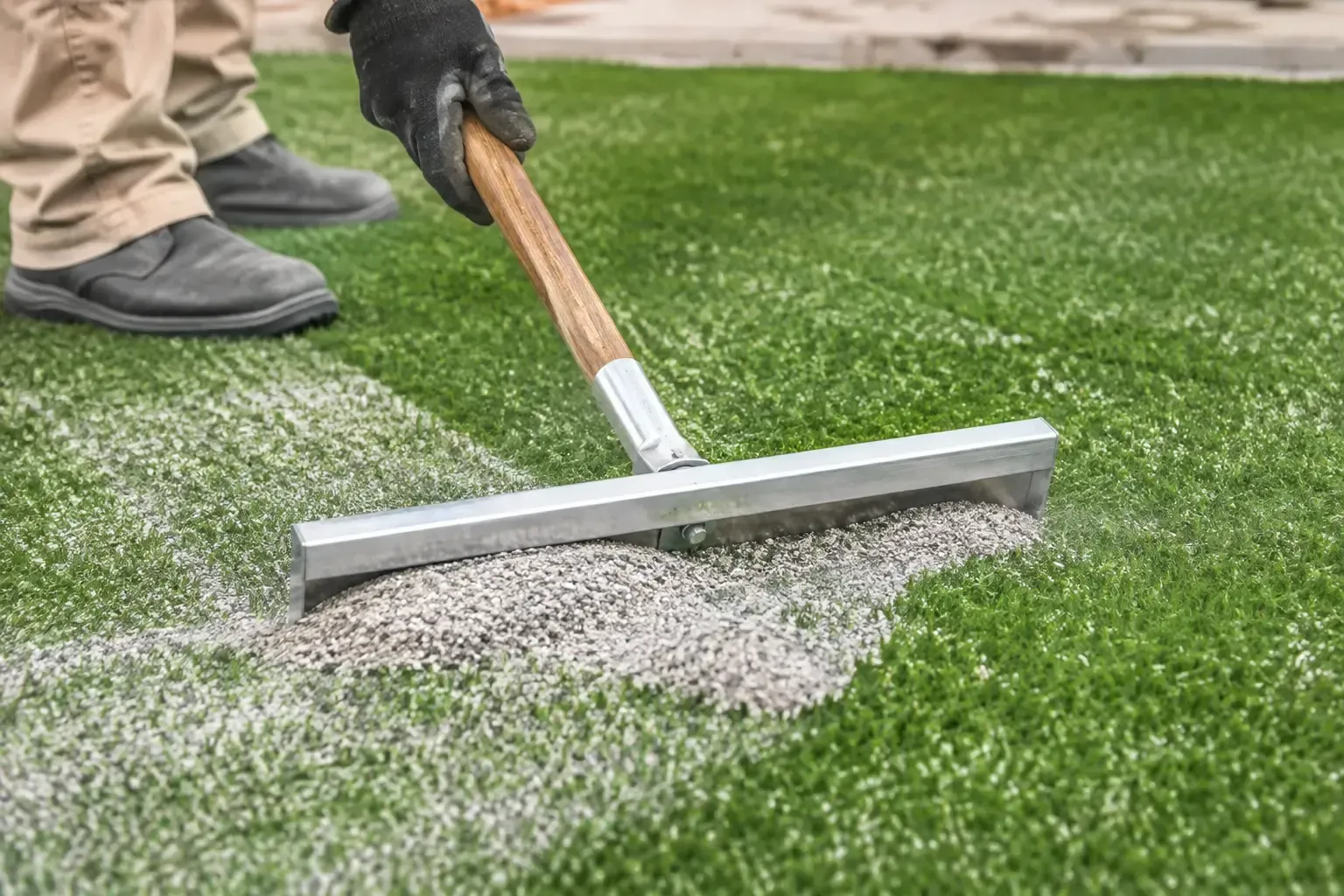
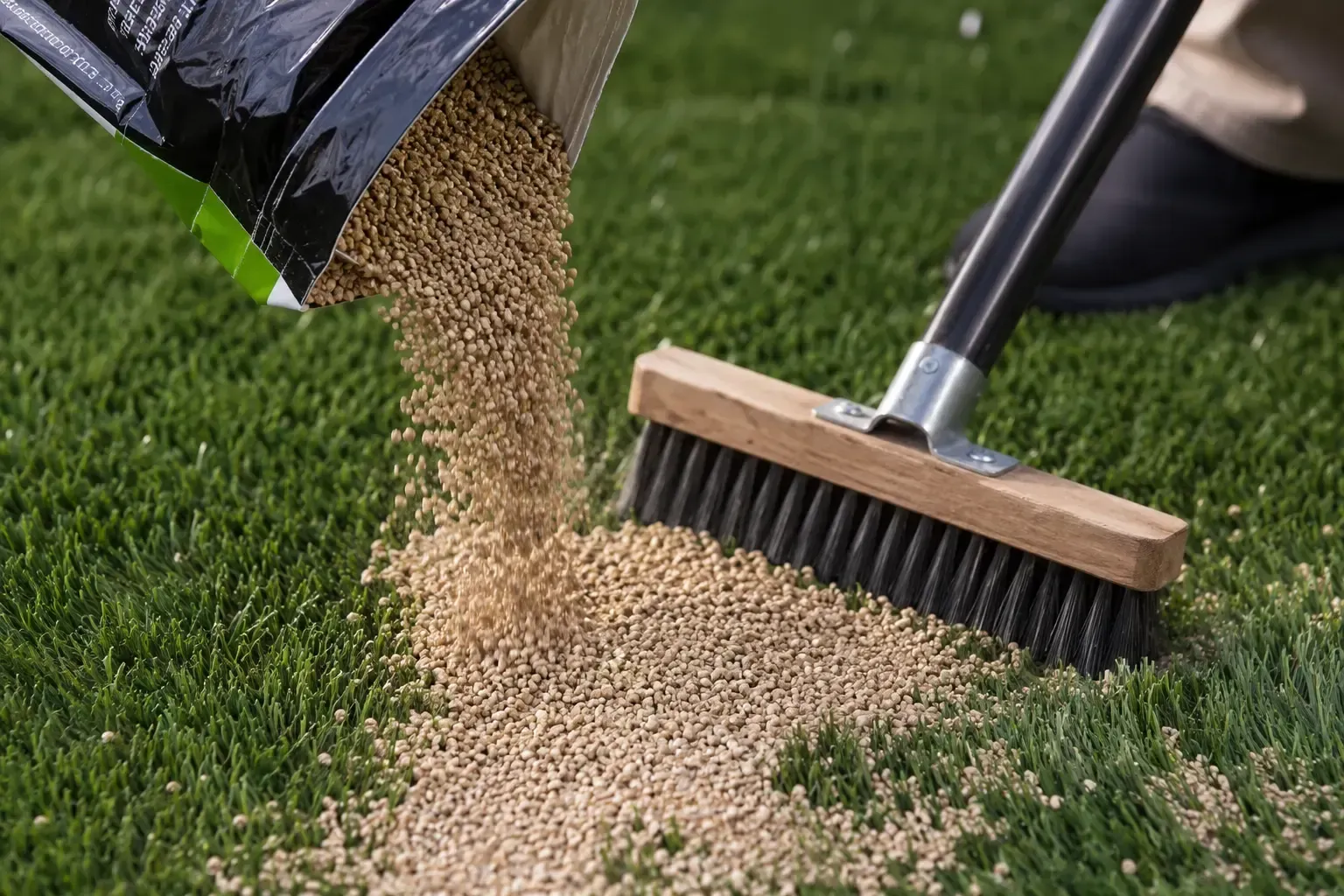
Infill is the sand brushed into the fibers. It adds weight and controls the speed of the ball. Silica sand is the most common infill used for golf setups. By adding or removing sand, we can adjust the speed to match your home course.
Selecting the right materials prevents frustration later. If your surface is too slow, you will develop bad habits. If it is too fast, you will struggle with distance control. Professional putting green installations focus on matching the materials to your specific playing style.
Analyzing Turf Options for Your Yard
Understanding the different materials helps you make an informed decision. The table below outlines common options used in backyard setups.
| Turf Category | Pile Height | Primary Application | Expected Ball Roll Speed |
|---|---|---|---|
| True Putt | 0.5 to 0.6 inches | Putting surface | Fast (Stimp 10 to 12) |
| Fringe Grass | 1.0 to 1.25 inches | Chipping borders | N/A (Creates drag) |
| Fairway Blend | 1.5 to 1.75 inches | Hitting mats and rough | N/A (Stands upright) |
| Landscape | 1.75 to 2.0 inches | Surrounding yard aesthetics | N/A (Decorative only) |
How to plan a backyard putting green in Henderson Nevada
Designing your project starts with measuring your available space. You need a surprisingly small area to create a great practice zone. A space as small as a few hundred square feet works beautifully. However, larger spaces allow for longer putts and more complex breaks.
Consider the sun exposure in your yard. The desert sun is intense during the summer months. Materials can get warm in direct afternoon sunlight. Placing your setup in a partially shaded area extends your practice time. If shade is not available, lighter-colored materials absorb less heat.
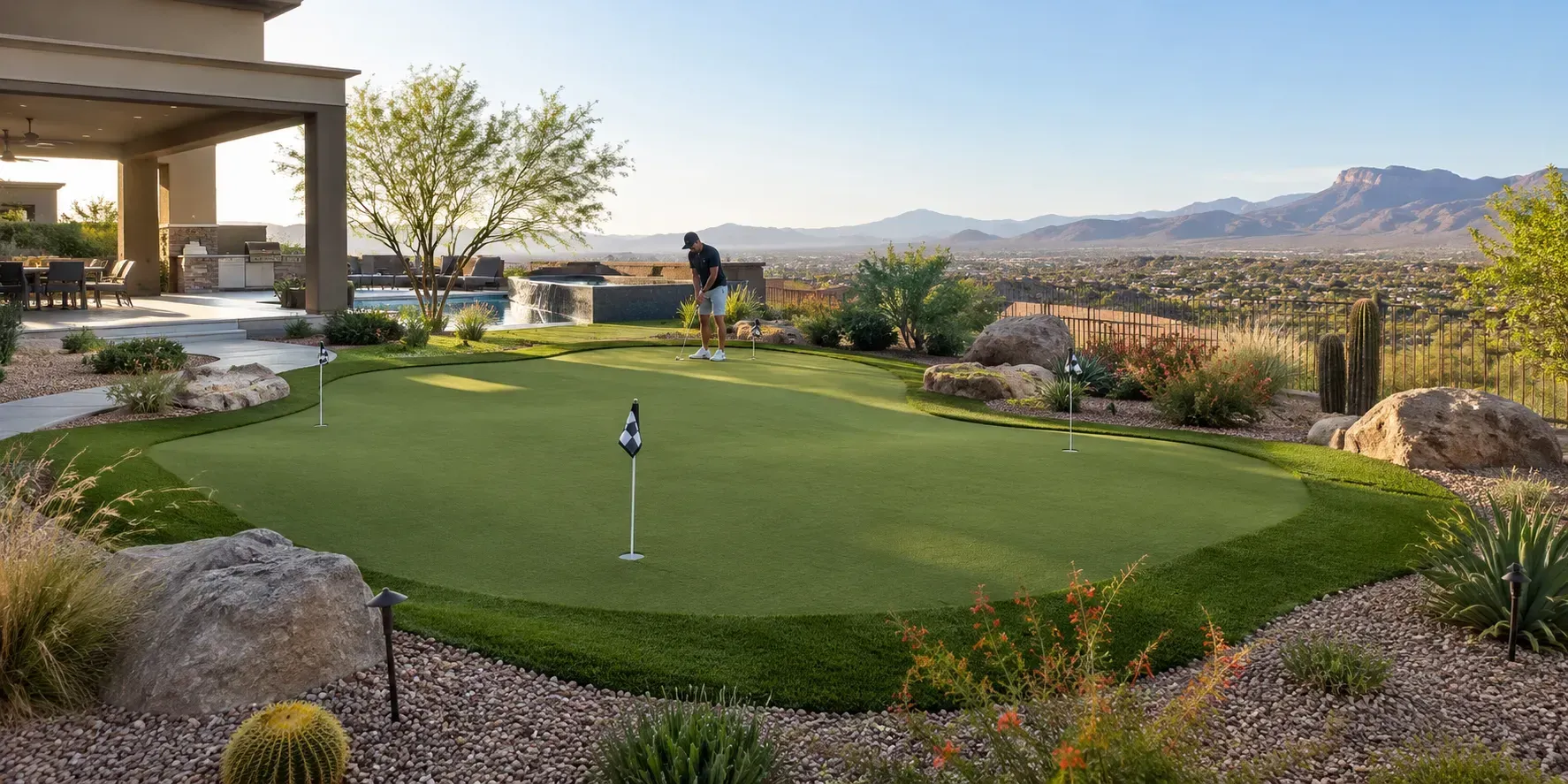
Cup placement requires strategic thinking. You want to maximize the number of distinct putts you can practice. Placing cups near the edges allows for longer cross-surface shots. Placing a cup on a slope lets you practice severe breaks. We typically install three to five cups depending on the total size.
You must also consider the surrounding landscape. Your practice area should blend naturally with the rest of your yard. We often use decorative rock or pavers to frame the space clearly. If your current grass is failing, this is a great time to consider larger turf replacement projects for the entire yard.
Customizing the Space with Premium golf turf Henderson
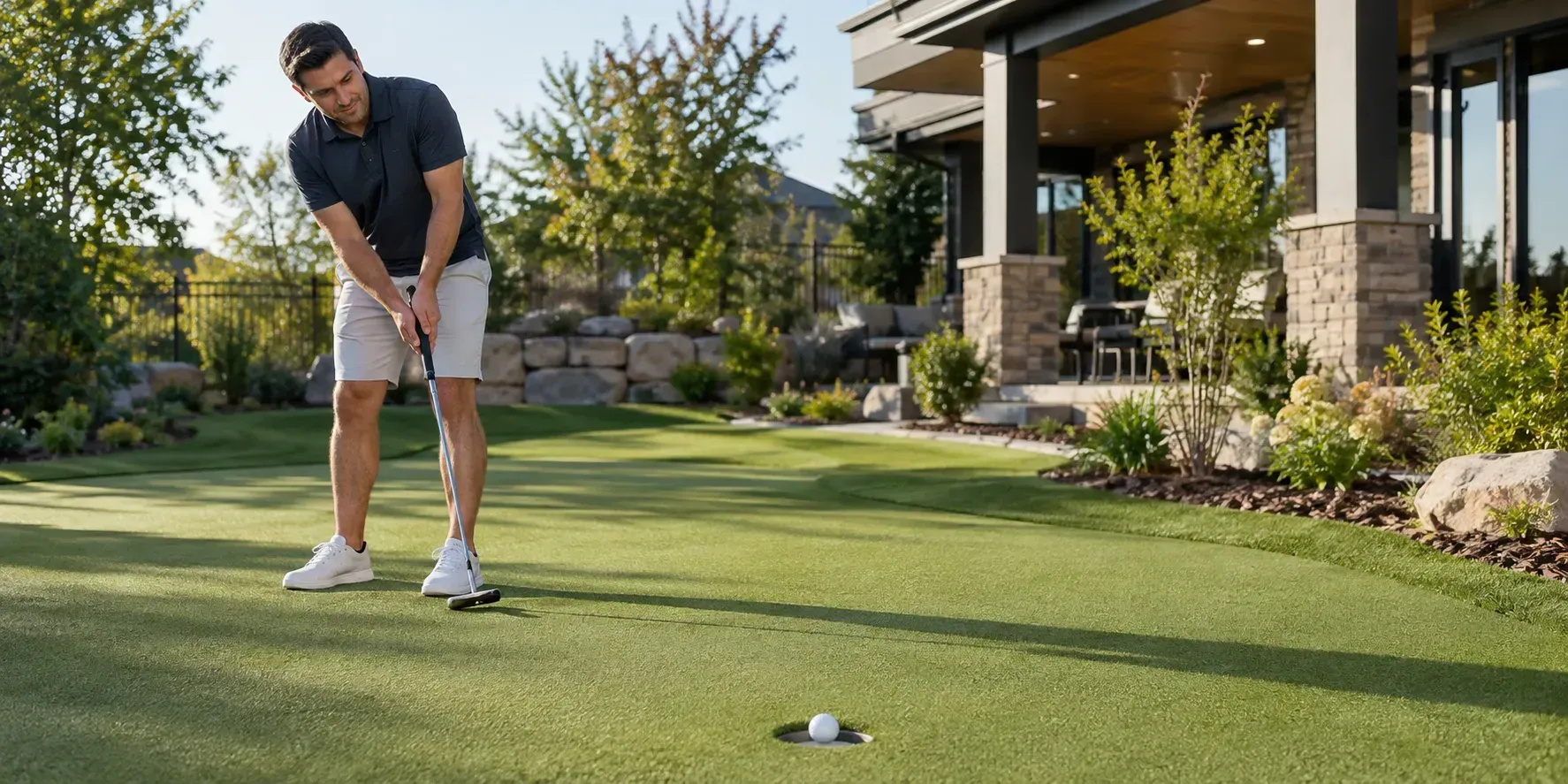
A true practice facility includes more than just a smooth surface. Adding a fringe border elevates the entire design. The fringe uses slightly longer fibers to mimic the apron of a real course. This border stops balls from rolling off into the dirt.
Fringe also allows you to practice chipping. You can drop a bucket of balls on the fringe and work on your bump-and-run shots. The transition between the longer fringe and the shorter center mimics a natural course perfectly.
Some homeowners take customization even further. You can add a small sand bunker to practice getting out of traps. You can add designated hitting mats for full iron shots into a practice net. These additions turn a simple yard into a complete training ground.
Custom shapes also add visual interest. A perfect square looks artificial and out of place. Kidney bean shapes or figure-eight designs look much more natural. These organic shapes flow well with existing desert landscaping. They increase the aesthetic value of your property while providing excellent functionality.
Maintaining the Quality of Your Short Game Practice Area
Synthetic materials require very little upkeep compared to natural grass. You will never need to mow, water, or fertilize your practice area. However, minimal upkeep does not mean zero maintenance. Keeping the surface clean ensures the ball rolls true.
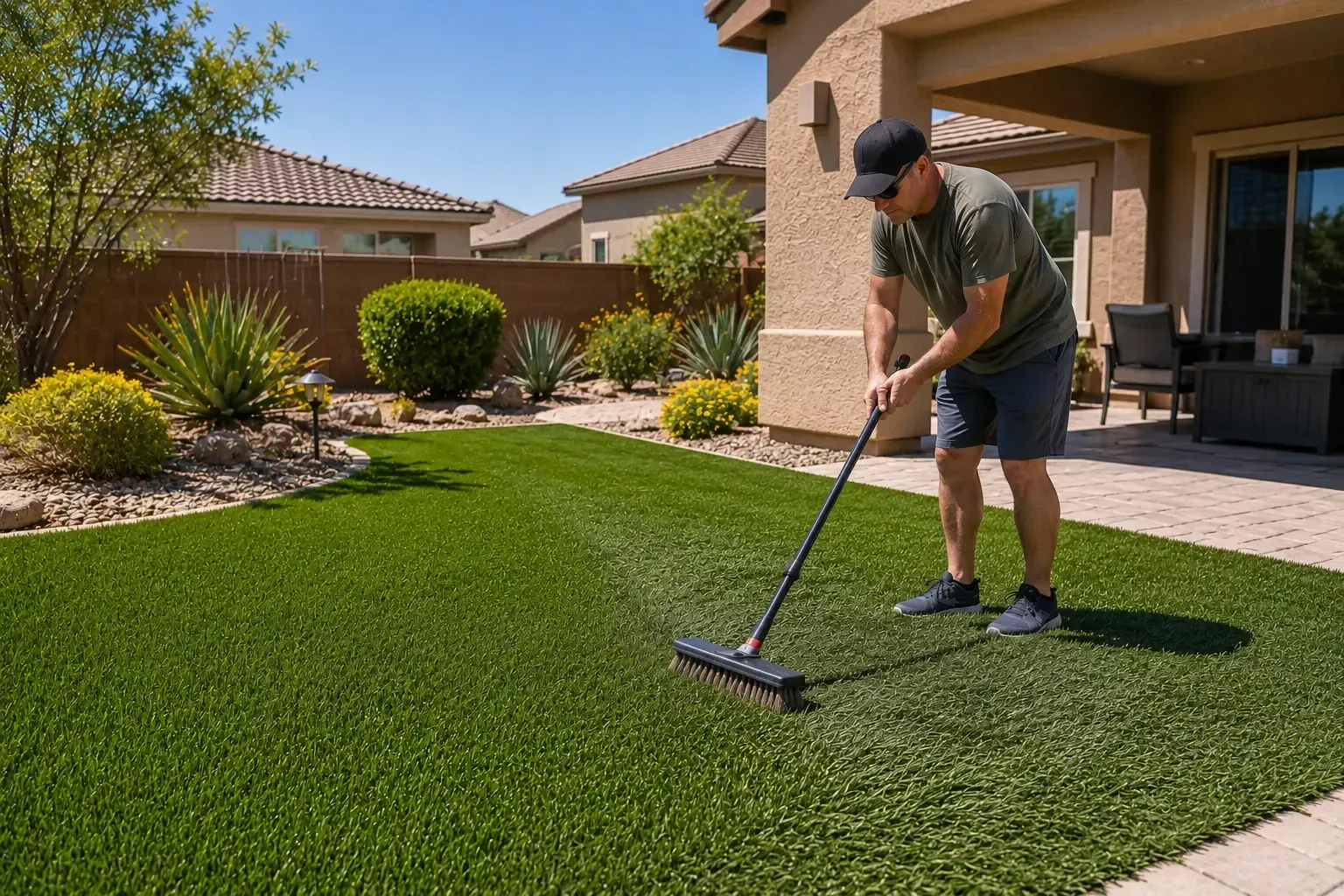
Leaves and dirt will eventually blow onto the surface. You can remove these easily with a standard leaf blower. Using a stiff-bristled push broom helps keep the fibers standing upright. Brushing the surface once a month prevents the material from matting down.
The infill may settle over time. Heavy foot traffic around the cups causes the sand to compress. You might notice the speed changing in these high-traffic zones. A professional can easily add top-dressing sand to restore the original speed.
We offer comprehensive services to keep your investment in top condition. Regular routine turf maintenance extends the lifespan of the materials significantly. A well-maintained surface will provide a decade or more of reliable practice time.
Partnering with Local Design Experts
Building a realistic practice area requires specialized knowledge. General landscapers rarely understand the physics of ball roll or stimp speeds. You need professionals who understand both landscaping and the game of golf.
Our team specializes in designing custom solutions for local homeowners. We source materials that withstand the intense heat. We grade the base layers to create challenging breaks. We install the cups perfectly flush with the surface to prevent unnatural lips.
You can learn more about our team and our commitment to quality installations on our website. We take pride in building spaces that look beautiful and perform flawlessly.
Project Wrap Up
Upgrading your yard with a dedicated practice area changes how you experience the game. You can step outside after dinner and hit fifty putts. You can refine your chipping technique without paying range fees. The convenience of practicing at home translates directly to lower scores on the course.
The key to success is careful planning and professional execution. Every detail matters, from the depth of the base rock to the type of infill used. If you are ready to transform your yard, we are ready to help. Reach out to our design team to schedule a consultation today. You can also call us directly at 725-888-8813 to discuss your vision.
Frequently Asked Questions
How much space do I need for a backyard practice area?
You can build a highly functional setup in as little as 200 to 300 square feet. This size comfortably accommodates three holes and provides enough room to practice short to medium distance putts. Larger yards allow for setups of 500 square feet or more.
Will the surface get too hot to use during the summer?
Synthetic materials do absorb heat during peak summer afternoons. However, you can easily cool the surface down by lightly spraying it with a garden hose before playing. Choosing lighter-colored materials and utilizing natural shade also helps manage surface temperatures effectively.
Can I chip onto the surface from my regular yard?
Yes. Many homeowners install a fringe border specifically for chipping practice. The fibers are designed to absorb the impact of the ball. Adding a specialized shock pad beneath the surface helps the ball check up and stop realistically when you chip onto it.