Artificial Turf Maintenance in Henderson: A Practical Seasonal Checklist
Where to Start With Artificial Turf Care in Henderson
This November, start your turf check at the back door and walk the route you take to the gate. Look down where you step off the patio, where your dog turns the corner, and where leaves collect against the fence. Those spots tell you more about what your lawn needs than a glance across the middle of the yard.
If you’re figuring out how to maintain synthetic grass in Henderson, Nevada, use the seasons as reminders to inspect your lawn. Let what you find guide the work. Leaves caught along a border, blades flattened by foot traffic, and a seam that has started to lift each call for a different response.
Your Seasonal Artificial Turf Maintenance Checklist
| Season | Where to look | What to do |
|---|---|---|
| Fall | Fence lines, gravel borders, and patio edges | Pick up leaves and twigs. Once the edge is visible, check whether the turf still sits flat against the paving. |
| Winter | Low spots and the areas below patio roofs or downspouts | After rain, note where water collects and how long it remains. Photograph any spot that repeatedly holds water. |
| Spring | Gates, play areas, and the route from the house to the yard | Clear loose debris and check for flattened blades. Use a brush approved for your turf where the fibers need attention. |
| Summer | Pet areas, dusty corners, and spaces beneath outdoor furniture | Spot clean according to the product guide. Lift movable chairs to check the turf underneath rather than dragging them across it. |
Fall: Clear the Edges Before You Brush
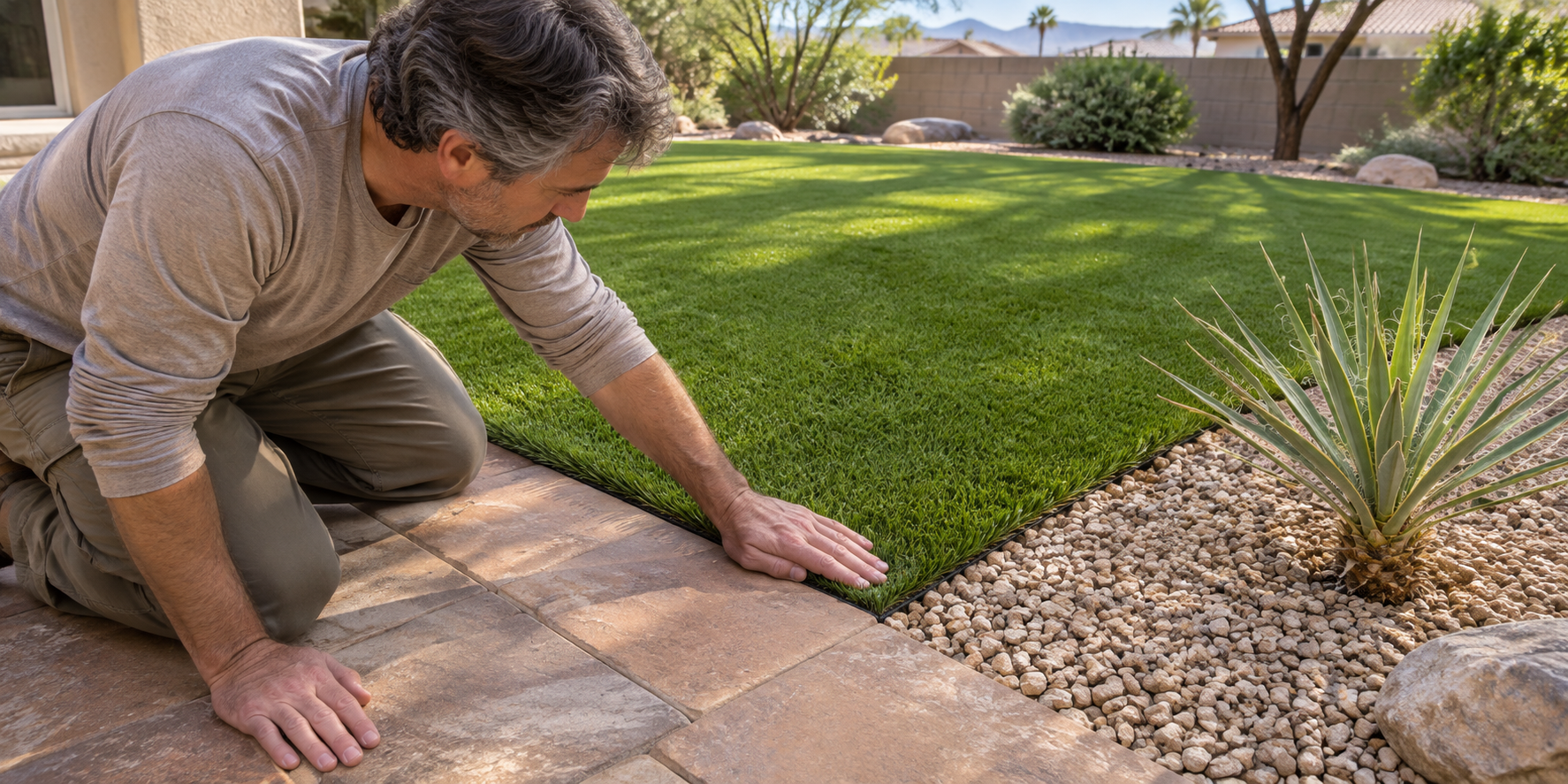
Start where the turf meets another surface. In a Henderson yard with decorative rock, a few pieces of gravel can work their way onto the grass. Pick those up by hand before brushing. Remove leaves from the base of the fibers and check the narrow strip beneath the gate, where debris can be easy to miss.
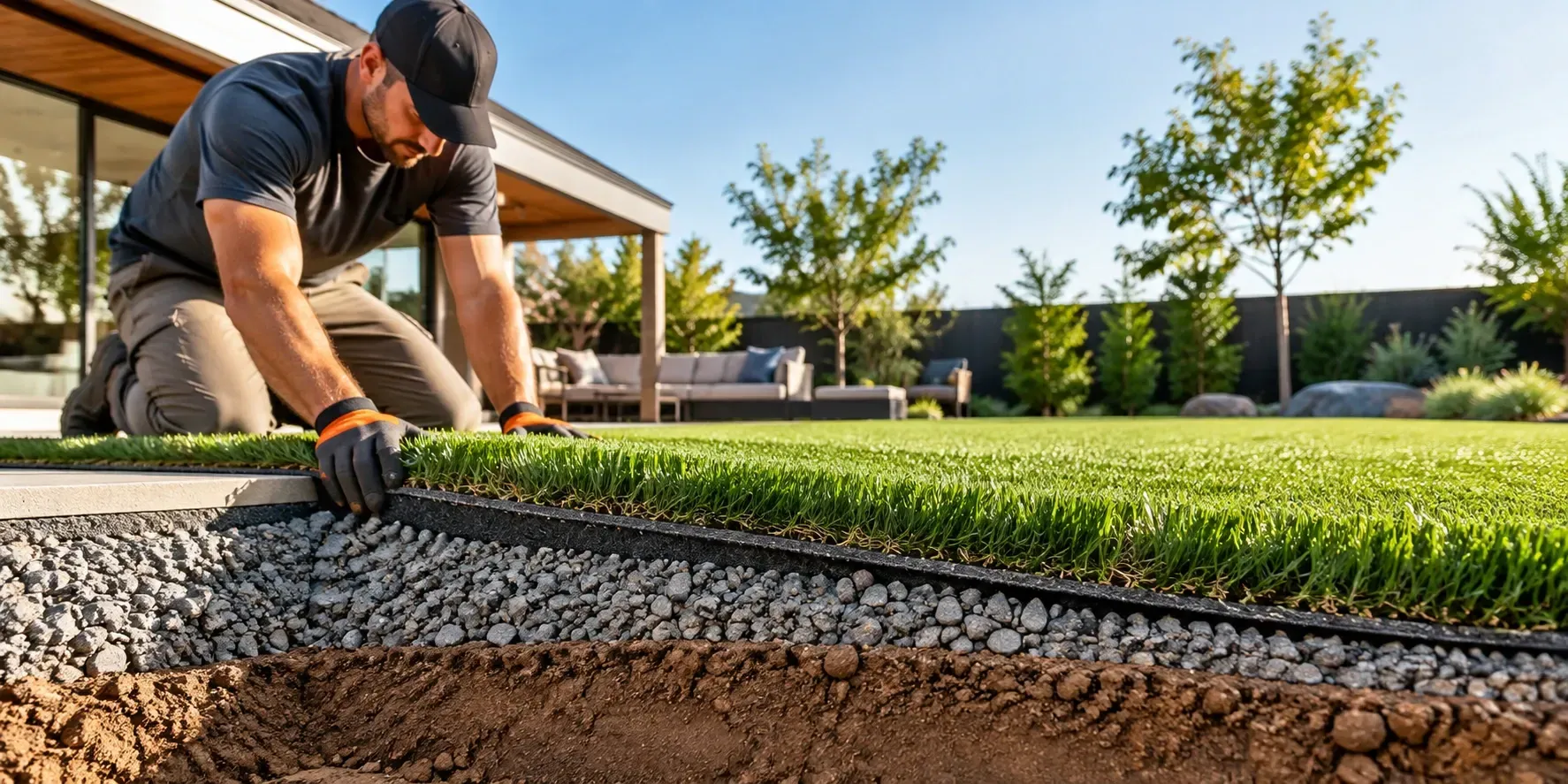
With the border clear, look along it from a low angle. If only the blades are leaning, that’s a grooming question. If the edge of the turf itself lifts away from the patio, leave that section undisturbed and photograph it for your installer. Brushing the blades won’t reattach the backing.
Winter: Read the Yard After Rain
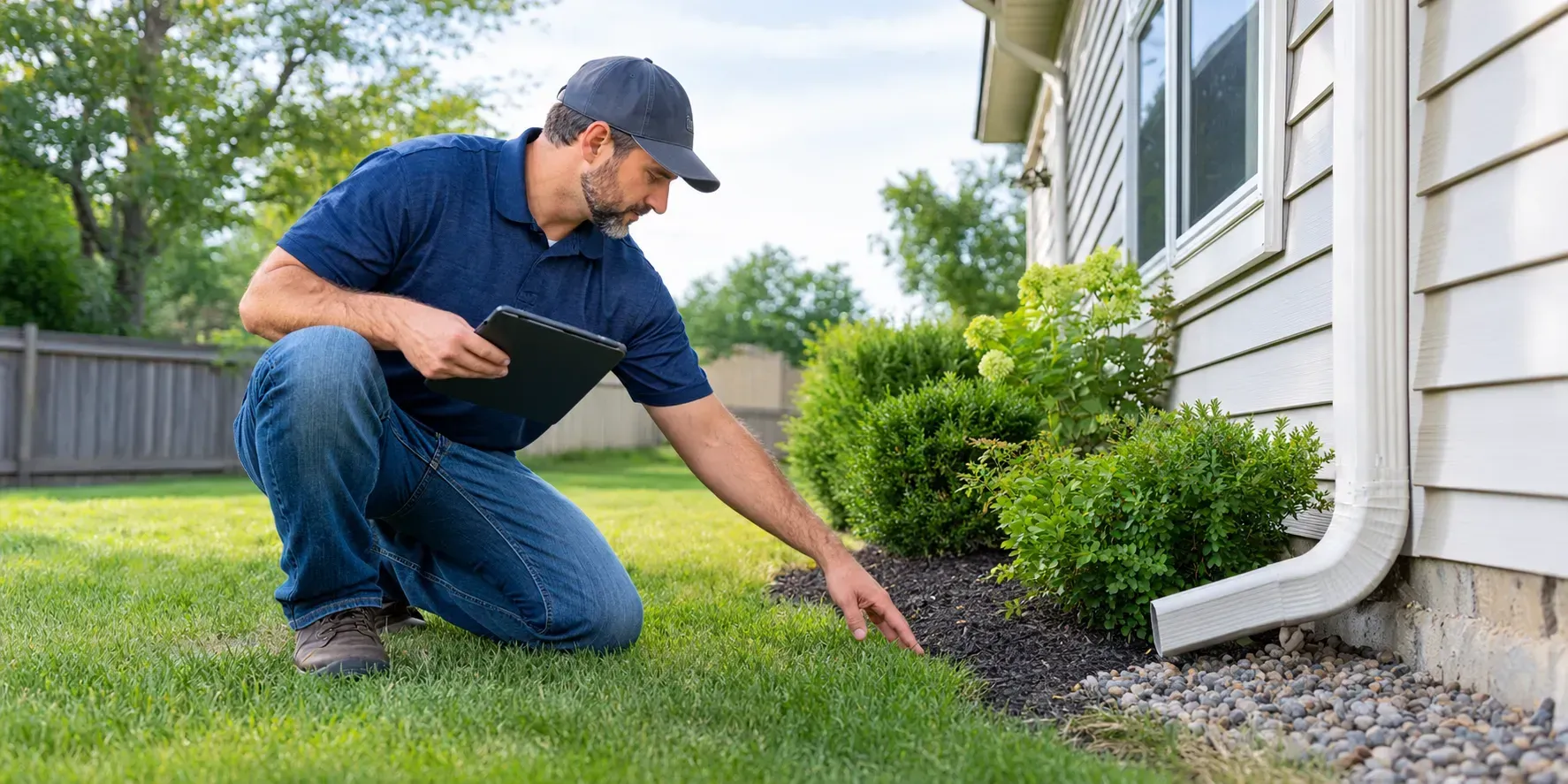
The next time it rains, check the lawn from the patio. Does water run onto it from nearby paving? Is there a puddle below a downspout? Take a second look after the rest of the surface has drained. A photo taken at each visit gives an installer something more useful than “the yard drains slowly.”
If water keeps collecting in the same place, resist the urge to cover it with infill. The slope, base, backing, and runoff from adjacent surfaces are all worth discussing. Our guide to artificial turf drainage in the desert explains what to ask about each one.
Spring: Brush the Routes That Get the Most Use
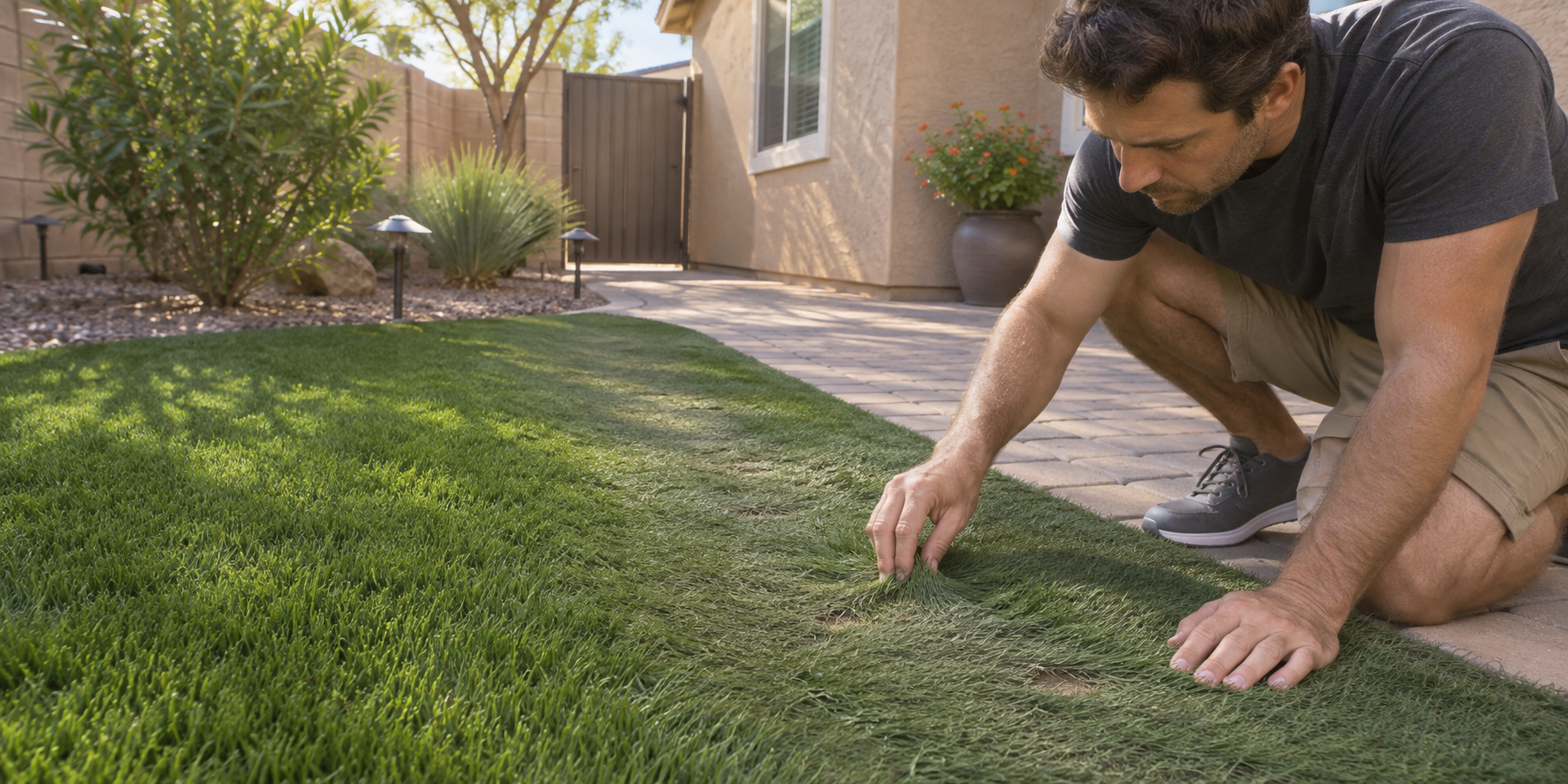
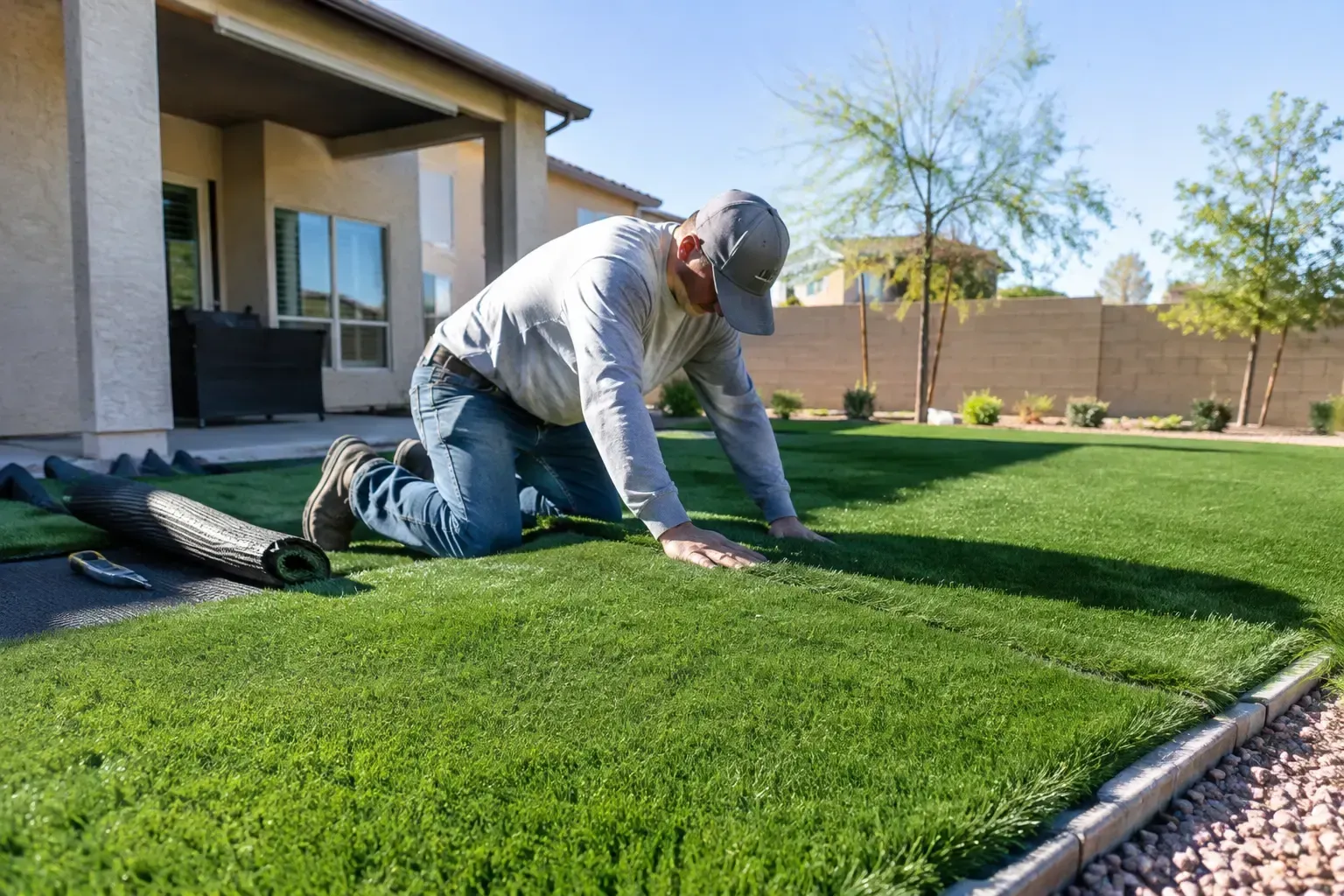
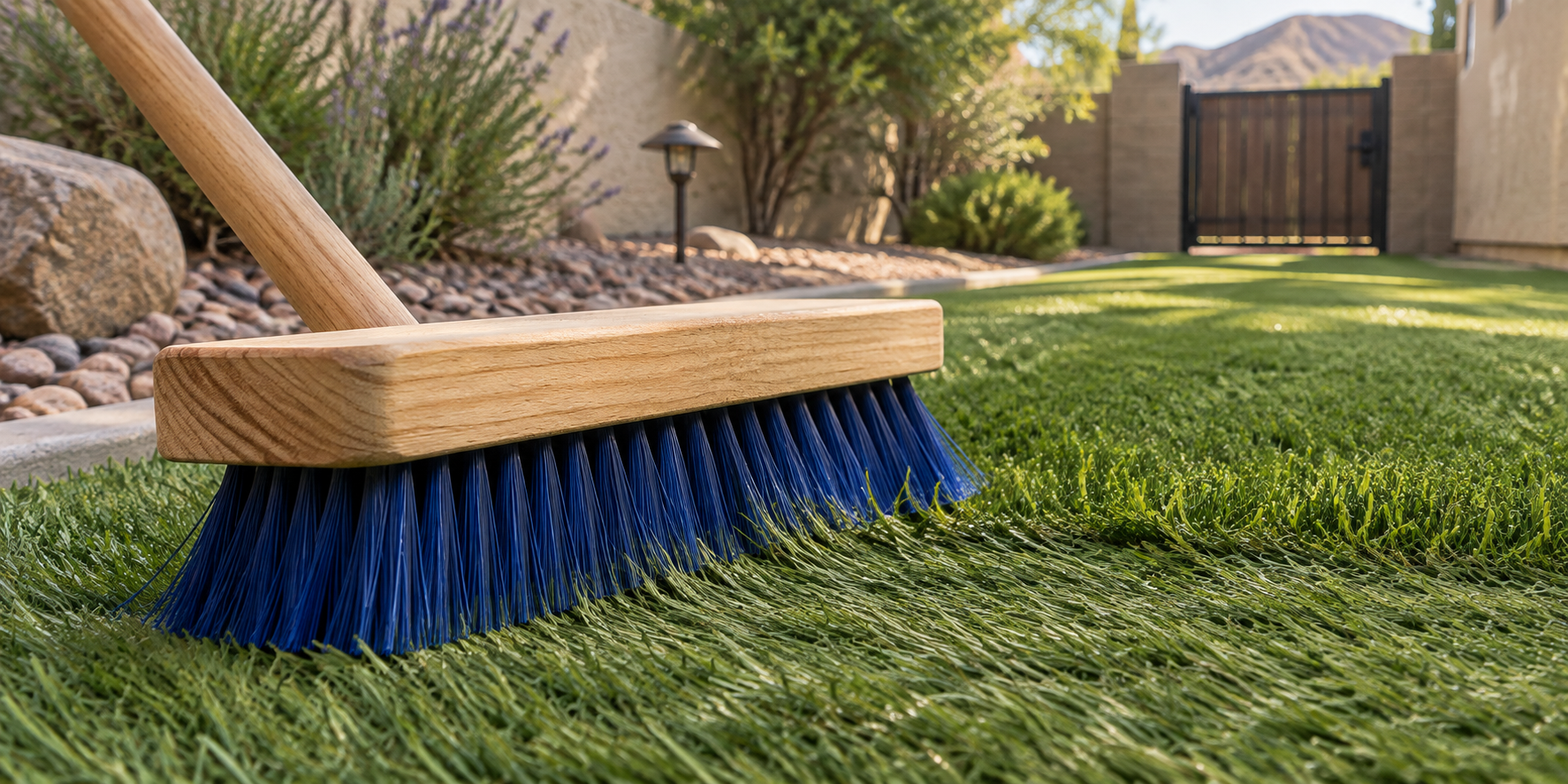
Compare the path from the back door to the gate with a quieter patch a few feet away. If the fibers along the path lie flat, clear away debris and gently brush a small section in the direction recommended for your product. Check the result before working across the whole path. Manufacturer care guides recommend paying particular attention to high traffic areas and avoiding metal or wire bristles, which can damage the fibers.
For routine turf cleaning and brushing, keep the tool simple: a manufacturer-approved synthetic bristle brush for the lawn, and a separate dustpan or container for debris. If the backing is visible or a seam is opening, stop there and ask your installer to assess it.
Summer: Give Pet Areas and Dusty Spots Their Own Routine
A dog that returns to the same corner creates a different cleaning need from dust settling across an open lawn. Pick up solid waste promptly, then follow your turf supplier’s directions for rinsing and spot cleaning that area. Check that any cleaner is compatible with the turf and infill before applying it. Occasional rinsing is part of some manufacturers’ care guidance, but your product instructions should determine the method.
If an odor returns to the same spot after cleaning, note where it occurs and whether water lingers there. That gives your installer a useful starting point before you try another cleaner or add more infill.
FAQ: Common Questions About Artificial Turf Maintenance
How often should I brush my artificial lawn?
Use your manufacturer’s guidance as a starting point, then check the areas you use most. A gate entrance that looks flattened may need brushing while the rest of the lawn still stands upright. There’s no need to treat every square foot on the same schedule.
Does a flat patch mean my turf needs more infill?
Not necessarily. Look first at whether the blades are pressed down or the surface underneath them has changed shape. Before adding material, ask your installer to confirm the infill type and amount specified for your lawn.
When should I request a professional maintenance assessment?
A lifting seam, exposed backing, or a puddle that keeps returning is a good reason to ask for a closer look. Take one photo of the whole area and another of the detail. Include when you first noticed it and what cleaning or brushing you’ve already tried.