Comprehensive Turf Maintenance Strategies for Henderson Property Owners
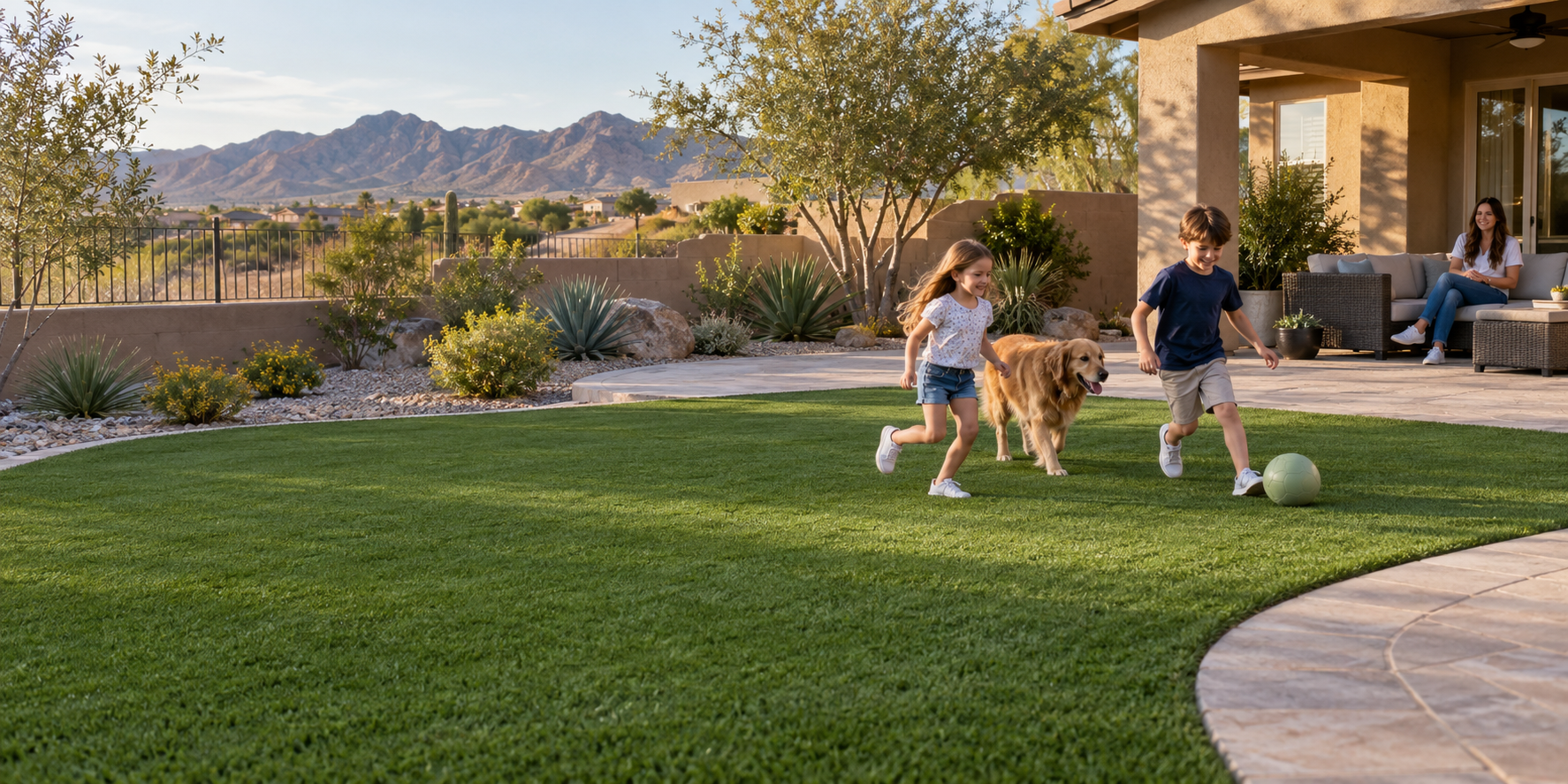
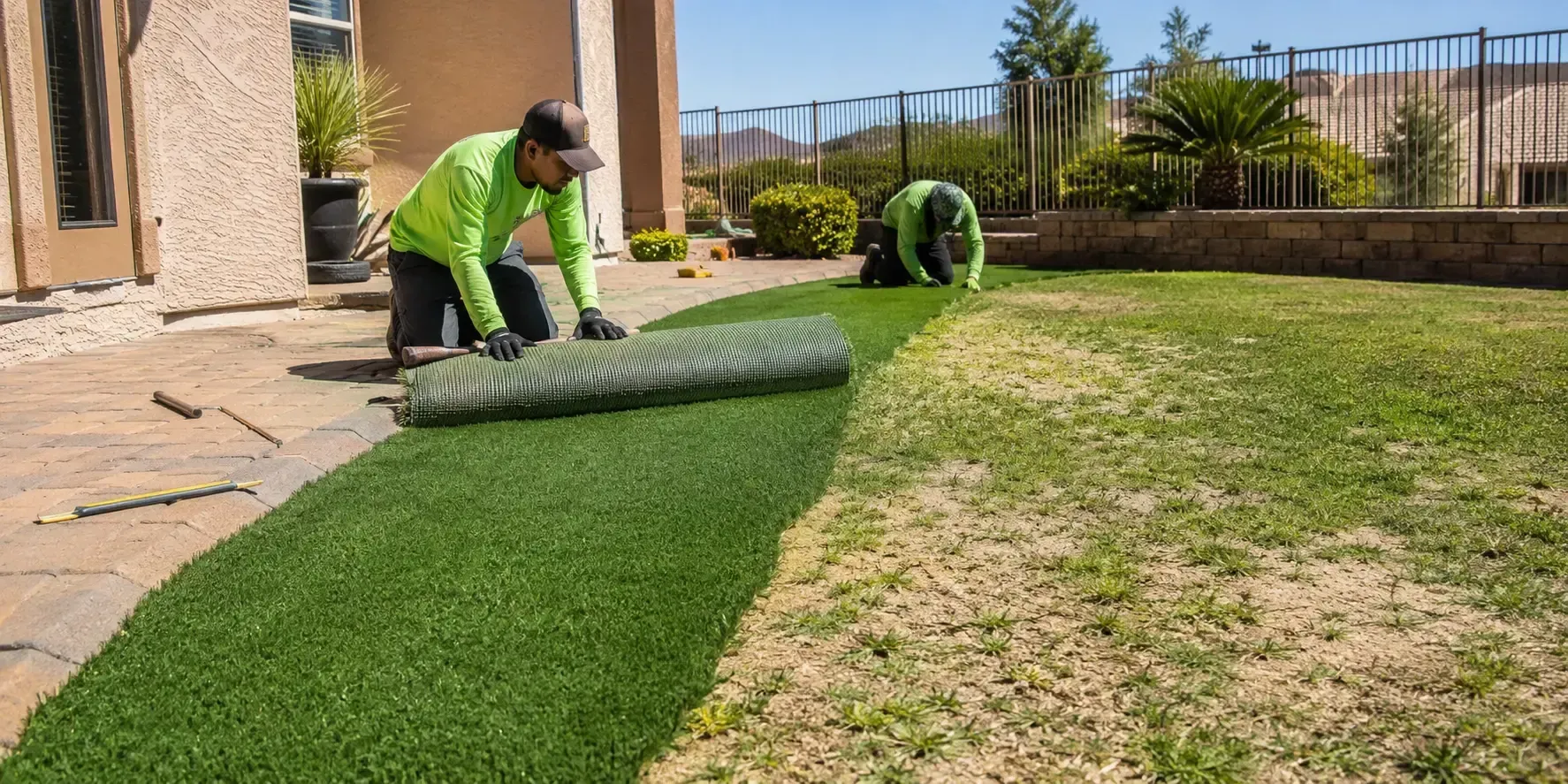
Living in Henderson, NV brings intense sunlight, prolonged dry spells, and occasional high desert winds. Property owners rapidly discover that while synthetic grass requires significantly less work than a traditional lawn, it still demands specific care to remain vibrant and functional. Establishing a structured upkeep routine protects your landscaping investment and ensures a beautiful outdoor space year-round. Henderson Turf specializes in providing tailored solutions for these exact environmental conditions, helping residents maintain pristine yards despite the harsh Mojave Desert climate.
Maximizing the Lifespan of Your Artificial Turf
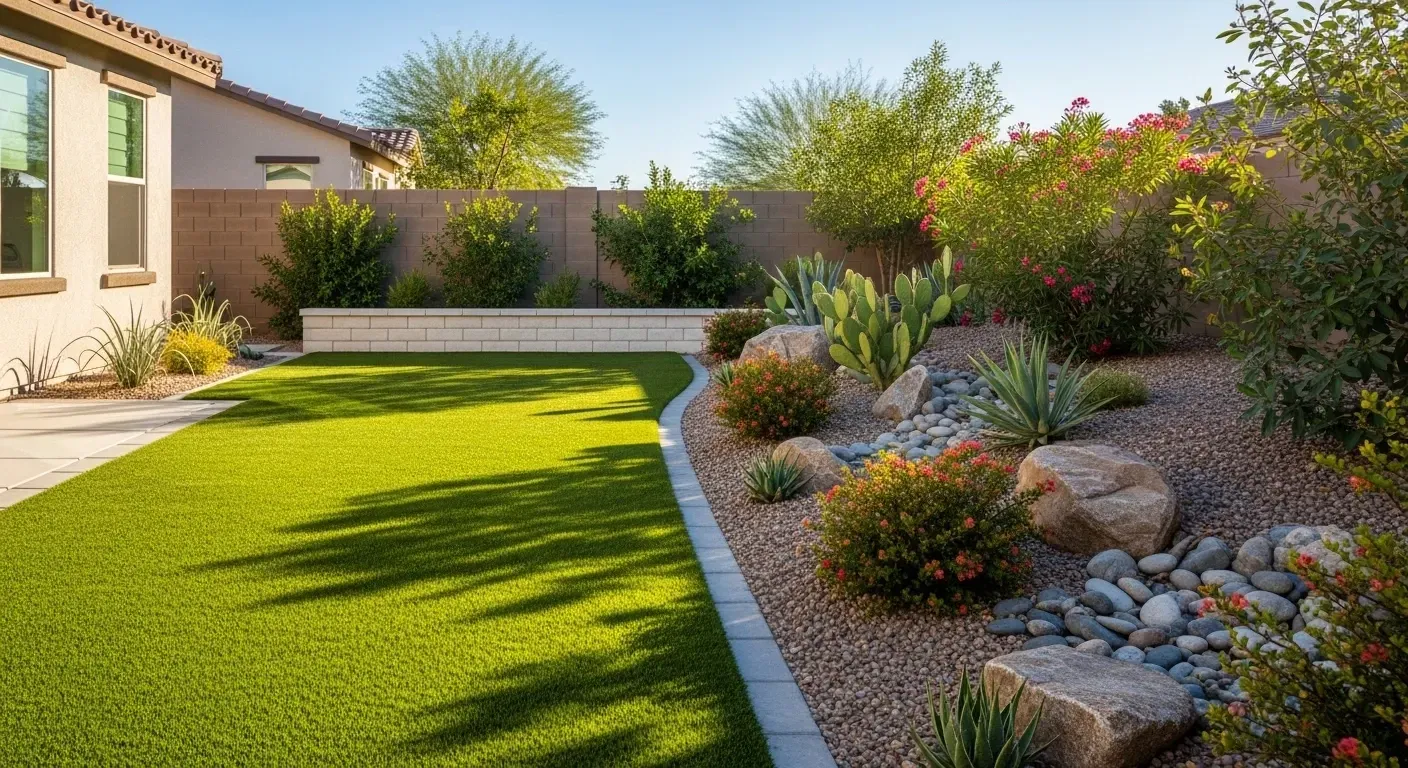
The intense Nevada sun beats down on yards for over 300 days a year. This continuous UV exposure combined with blowing sand can compromise the integrity of synthetic fibers over time. Proper turf maintenance mitigates these environmental stresses. Routine care prevents the blades from matting down under heavy foot traffic and keeps the infill properly distributed across the entire surface area.
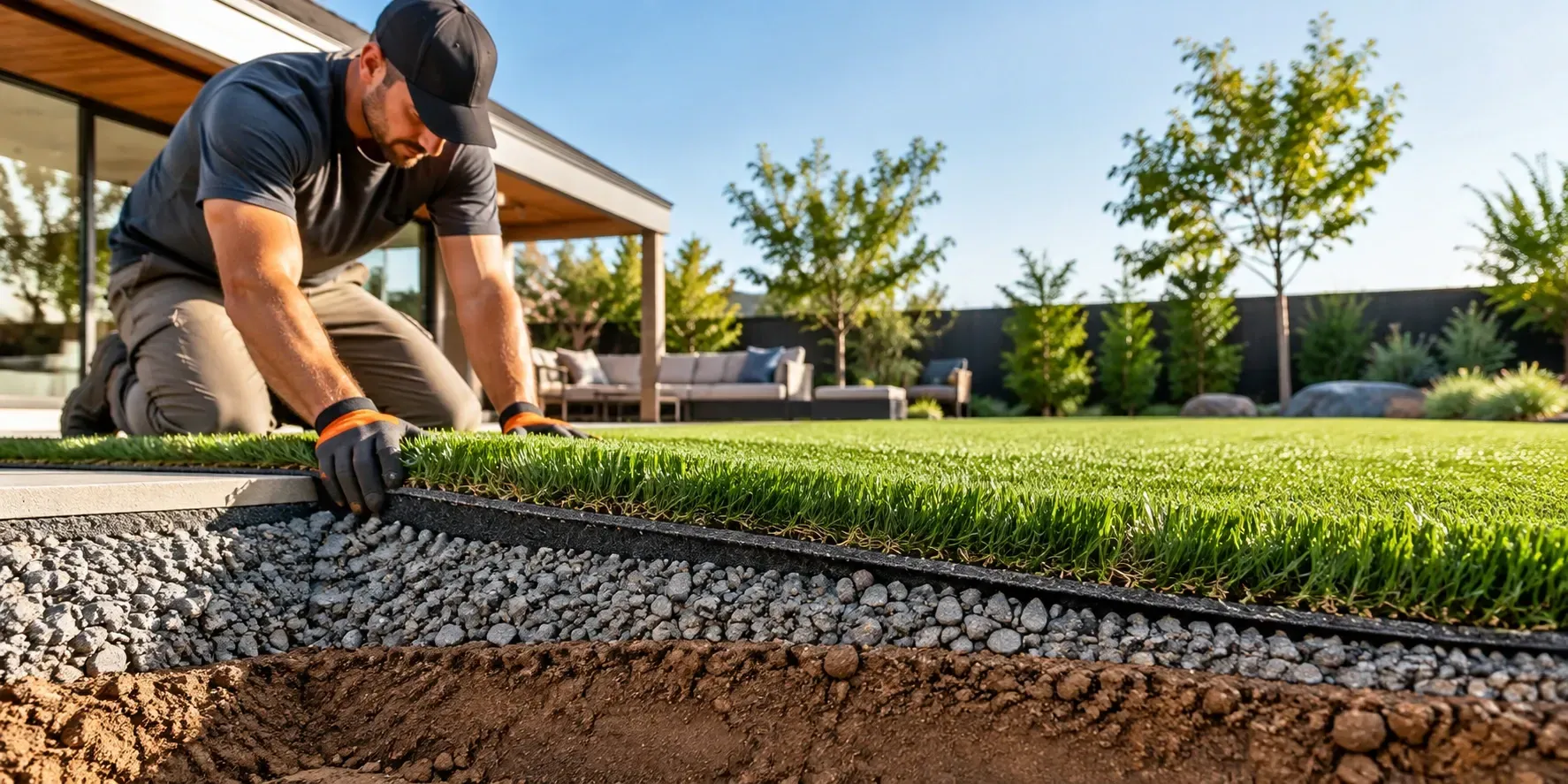
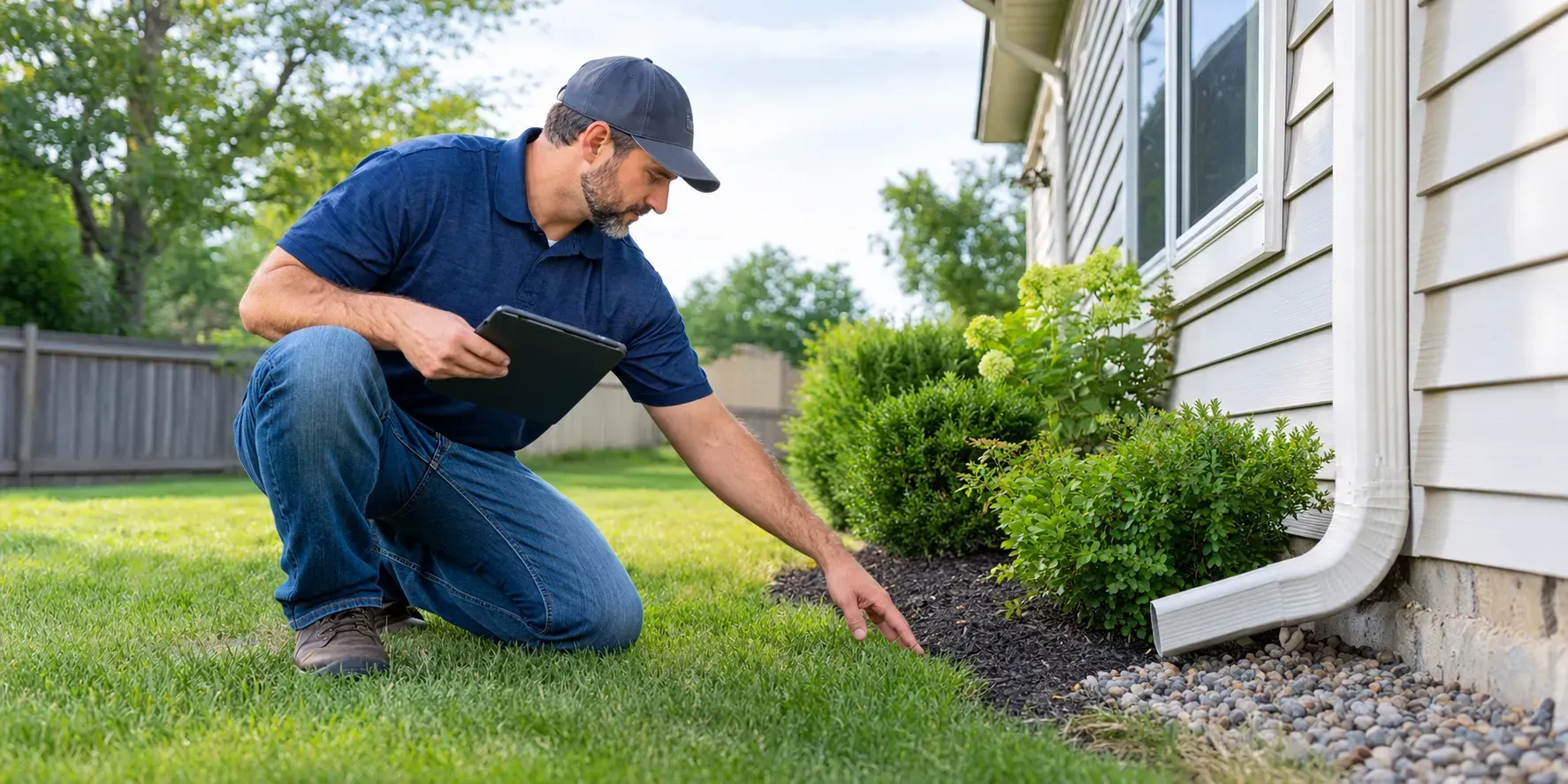
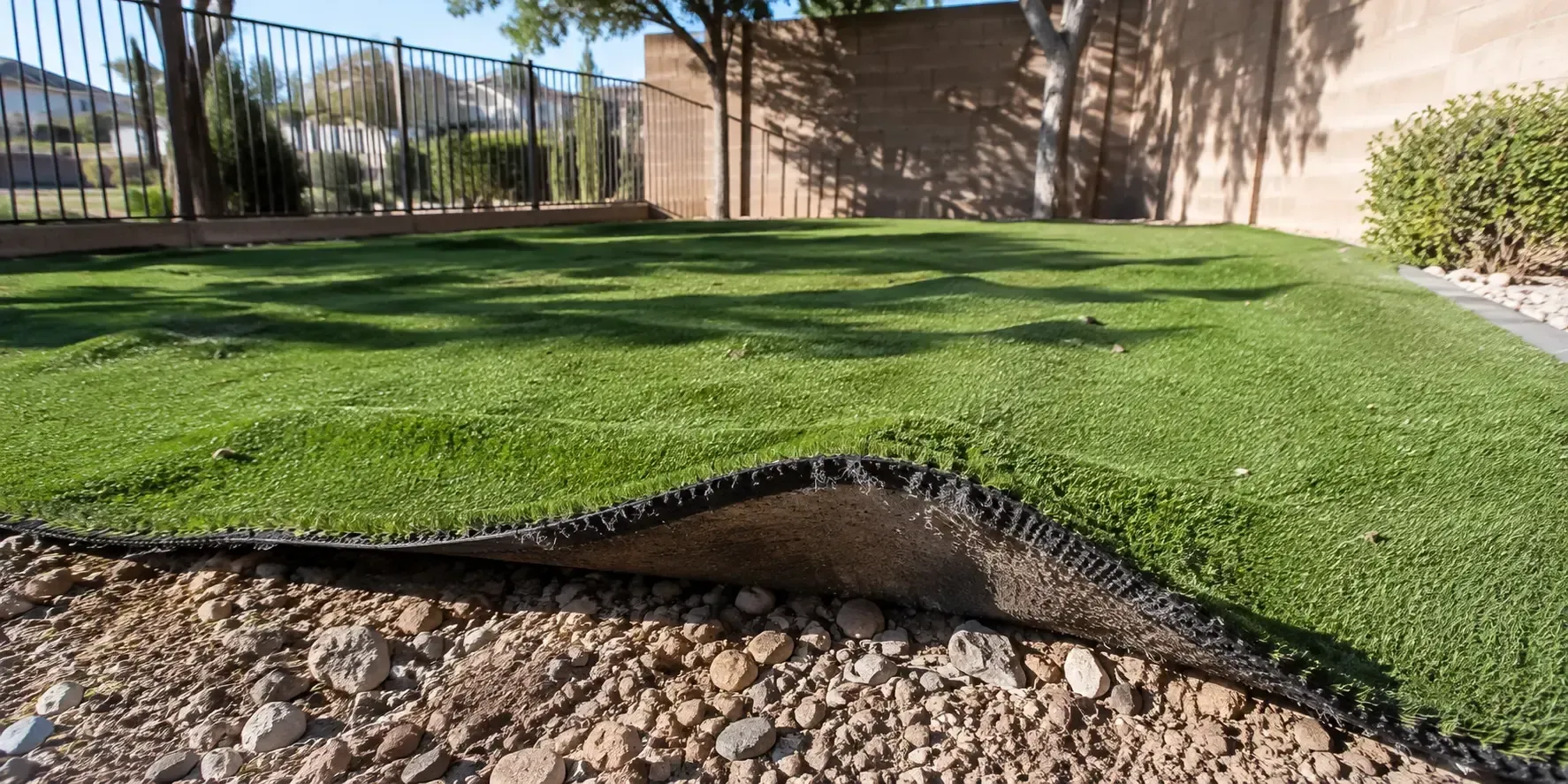
When you actively remove debris and manage surface dust, you preserve the structural integrity of the backing material. Neglecting these basic tasks often leads to poor drainage over the years. Dust, pollen, and organic matter can settle into the drainage pores, causing water to pool during rare but heavy Henderson rainstorms. A proactive approach guarantees your yard drains efficiently, resists compaction, and maintains its resilient bounce for over a decade.
Establishing a Routine Cleaning Protocol
Maintaining a pristine lawn requires a few simple but highly consistent actions. Homeowners should focus their attention on three primary tasks: debris removal, cross-brushing, and regular rinsing.
- Debris Removal: Desert winds frequently deposit leaves, twigs, and loose gravel across your yard. Use a plastic landscape rake or a standard leaf blower to clear this material weekly. Metal rakes can catch and tear the woven backing and should be avoided entirely.
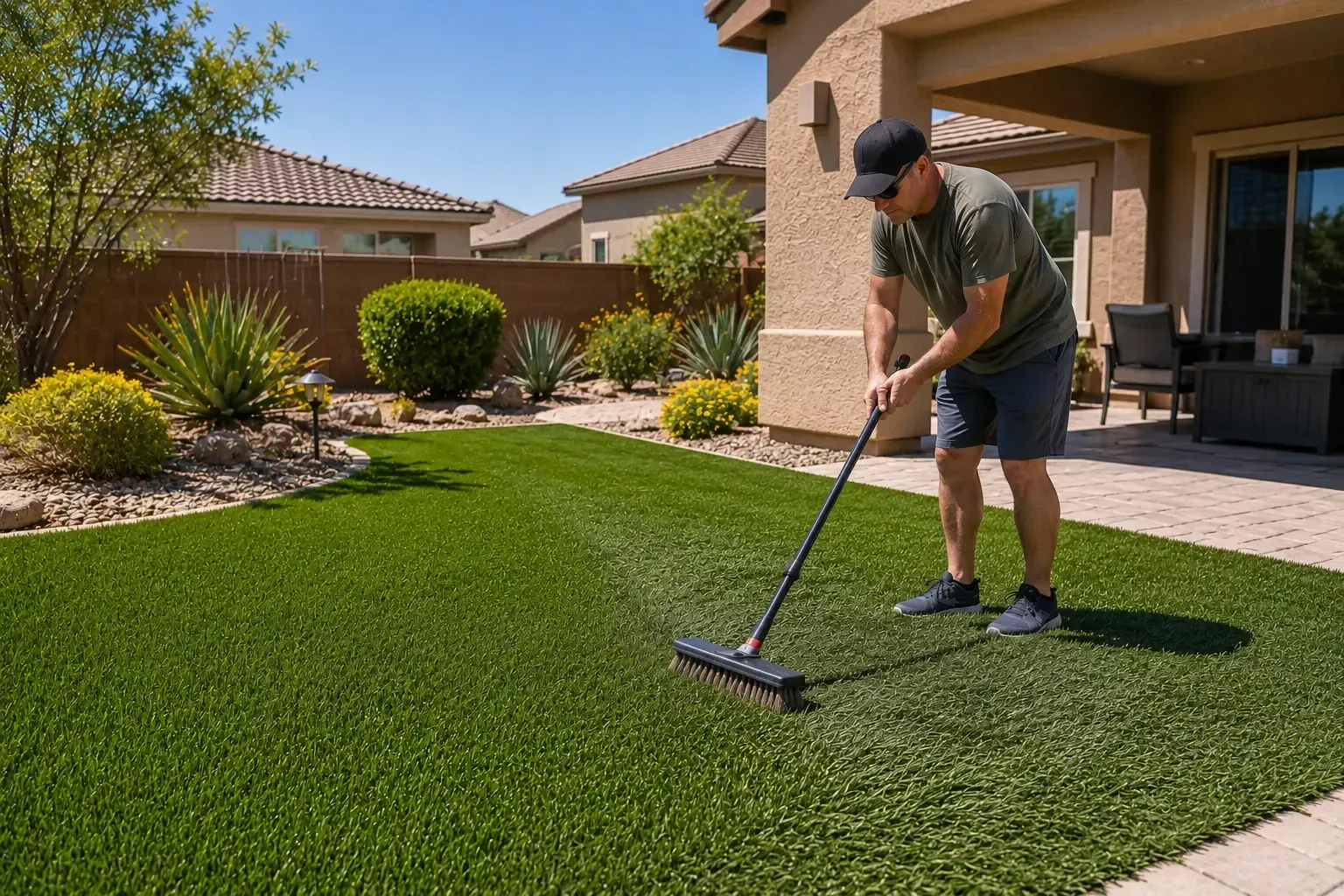
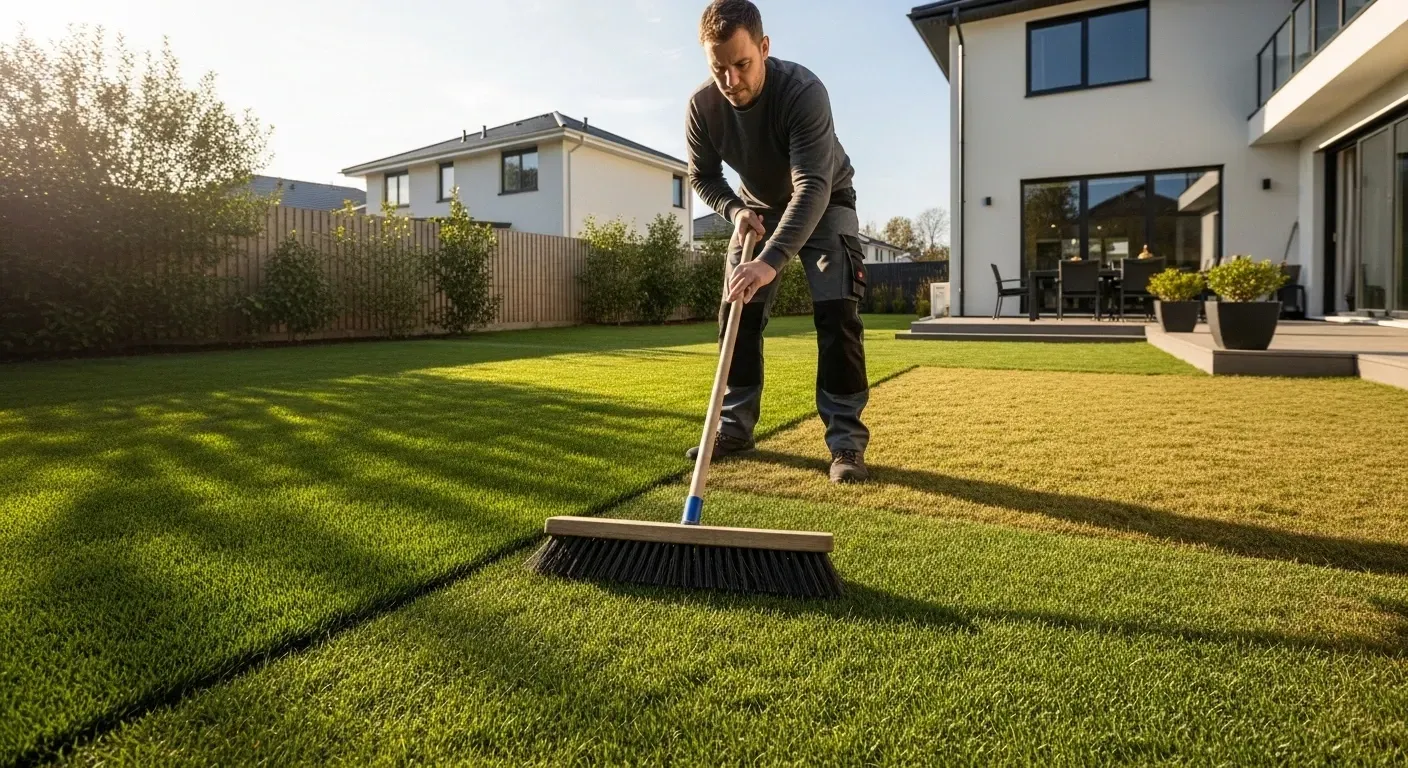
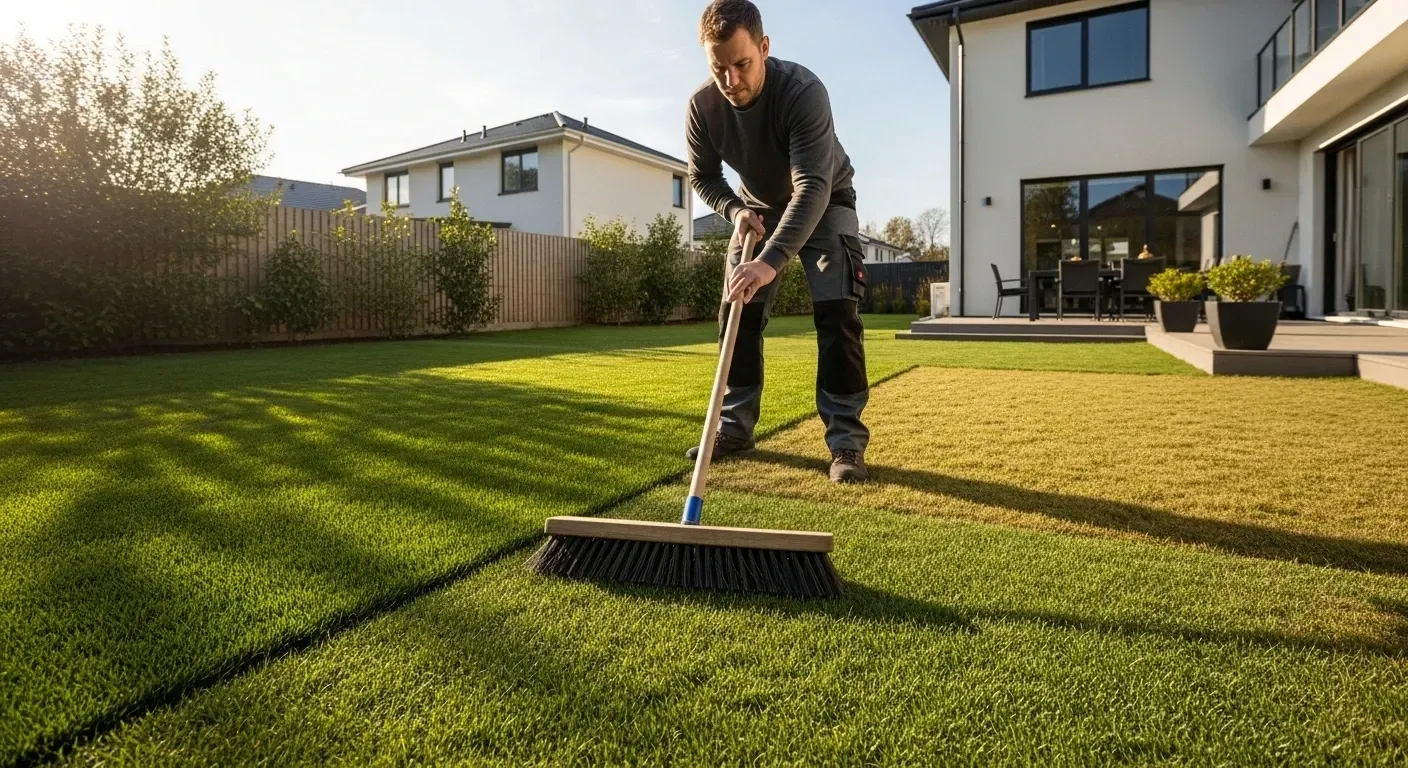
- Cross-Brushing: Foot traffic naturally compresses synthetic blades. Using a stiff-bristled push broom to brush against the grain forces the fibers to stand upright. This step is incredibly important for high-traffic areas near patios, pool decks, or main walkways.
- Surface Rinsing: A light monthly rinse with a standard garden hose removes accumulated dust and airborne pollutants. This simple step instantly revitalizes the color of the grass and keeps the yard sanitary for children and pets.
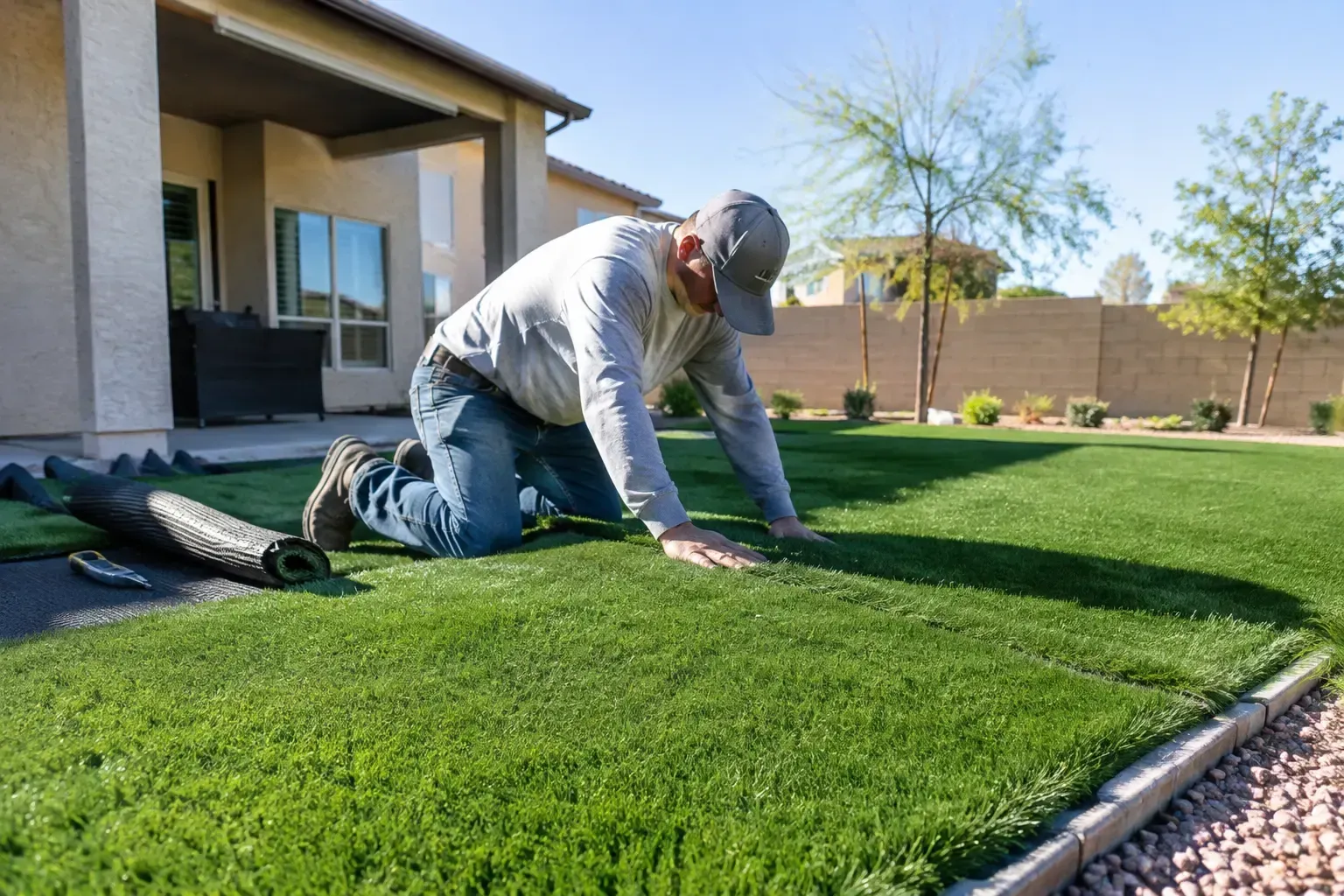
If you are currently considering a full yard renovation, reviewing the benefits of a proper installation is highly recommended. You can learn more about the initial setup process in our guide on how to
upgrade your Henderson home with residential artificial turf.
Handling Pet Waste on Synthetic Lawns
Many residents invest in residential artificial turf specifically for their dogs. Managing pet waste properly is crucial for preventing strong odors from baking into the yard during the hot Henderson summers. Solid waste should be picked up promptly, and the immediate area should be spot-cleaned with a paper towel or light rinse.
Liquid waste requires a bit more attention. Hosing down pet relief areas frequently dilutes urine and flushes it entirely through the drainage backing into the base layers below.
For yards with multiple dogs, applying a specialized, pet-safe enzyme cleaner monthly breaks down odor-causing bacteria before it becomes a noticeable problem. Ensuring your infill level remains adequate also helps neutralize smells and facilitates rapid liquid absorption.
Managing Weed Growth in Synthetic Surfaces
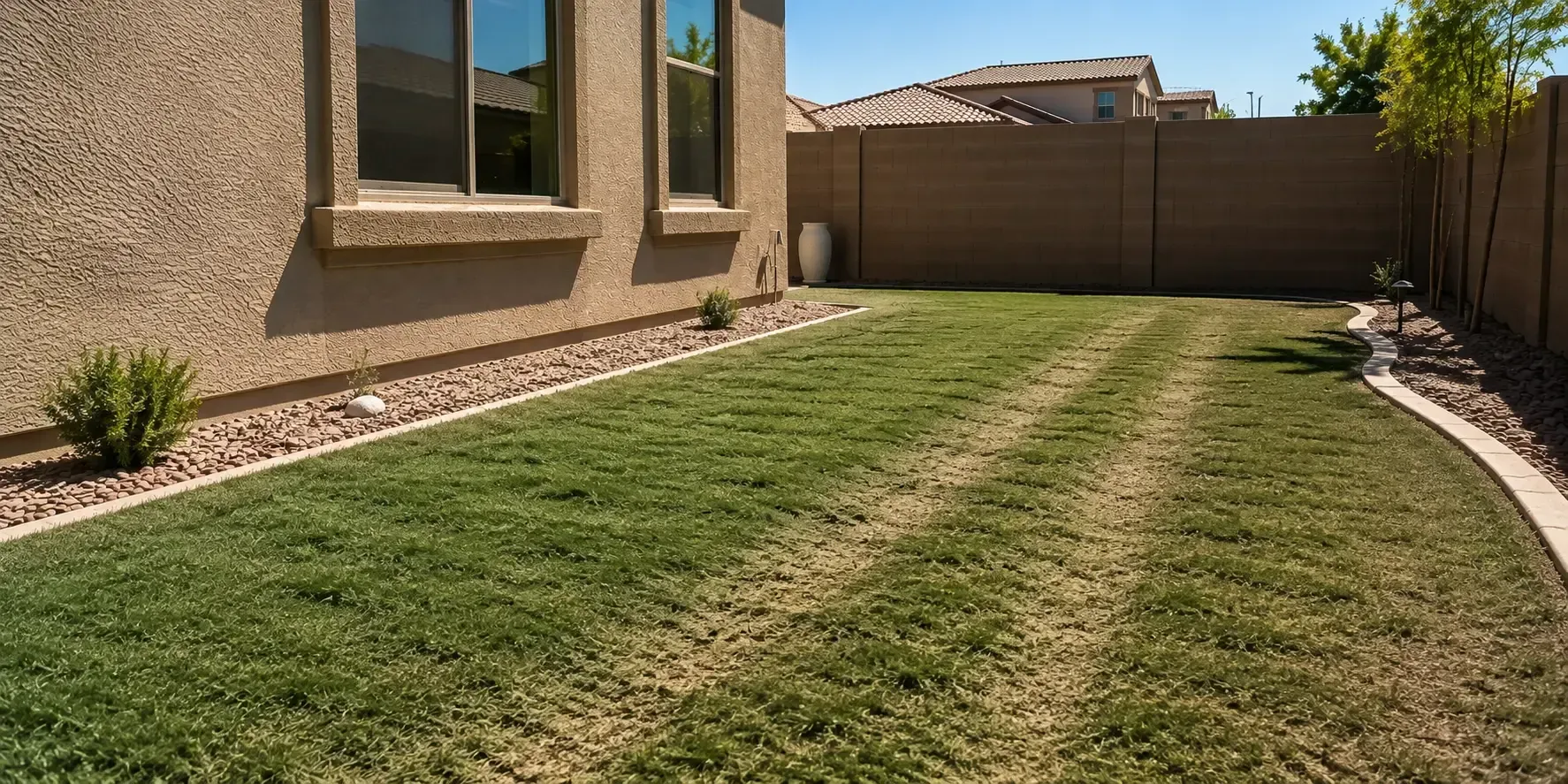
Many homeowners incorrectly assume that switching to a synthetic lawn eliminates weed growth entirely. While the impenetrable backing material stops the vast majority of weeds from sprouting from the soil below, surface weeds can still occur. Windblown seeds frequently land in the infill material. When mixed with organic dust and occasional moisture, these seeds can successfully germinate within the top layer of the yard.
Treating these surface weeds requires a careful approach. Pulling them gently by hand is usually the safest method. If you must use an herbicide, select a gentle, water-based weed killer. Oil-based chemicals can severely damage the synthetic backing and permanently degrade the turf fibers. Applying a pre-emergent weed treatment along the perimeter of your yard twice a year creates a barrier that stops invasive desert plants from encroaching on your clean edges.
Analyzing the Time Savings: Natural vs. Synthetic Landscapes
Homeowners often ask exactly how much time and money they will save by switching from living grass to a synthetic alternative. The table below outlines the stark differences in annual upkeep requirements for a standard residential yard in Southern Nevada.
| Maintenance Category | Traditional Grass Lawn | Synthetic Grass Lawn | Annual Impact |
|---|---|---|---|
| Irrigation & Watering | 3 to 4 times weekly | Monthly light rinse | High water utility savings |
| Mowing & Edging | Weekly during growing season | Never required | Eliminates fuel and equipment costs |
| Fertilization & Weed Control | Quarterly chemical applications | Rare weed spot-treatment | Significant chemical expense reduction |
| Aeration & Overseeding | Annually in the fall | Not applicable | Eliminates costly seasonal labor |
| Raking & Brushing | Weekly leaf removal | Monthly cross-brushing | Reduces overall manual labor by 75% |
Understanding these specific metrics clarifies why so many locals trust the team at
Henderson Turf for their landscaping needs. The initial investment pays dividends through drastically reduced water bills and the elimination of weekend lawn labor. To understand our history and commitment to quality installations across the Las Vegas valley, you can read more
about us.
Specialized Care for Recreational Installations
Not all synthetic surfaces are treated equally. A standard backyard requires a different touch than specialized recreational setups. For example, maintaining professional-grade putting greens requires precise attention to the infill material. The speed and roll of the golf ball depend entirely on a perfectly smooth, heavily compacted surface.
Debris on a golf surface can permanently alter the trajectory of a putt. Property owners must sweep these areas diligently and ensure the specialized silica sand infill remains perfectly leveled. Heavy rains or intense windstorms can displace this infill, requiring a quick touch-up to restore professional-level playability. Rolling the surface occasionally with a heavy, water-filled roller helps pack the material back to exact tournament standards.
Knowing When to Call the Professionals
While basic upkeep is easily managed by property owners, certain situations warrant professional intervention. Over time, infill levels naturally deplete due to wind, heavy rain, and consistent foot traffic. When the grass blades begin to lay flat despite your regular brushing efforts, it is likely time for an infill top-off.
Additionally, if you notice the edges of your installation lifting, or if severe static electricity builds up during the dry Nevada winters, a professional maintenance crew can resolve the issue swiftly. Addressing these minor repairs early prevents costly backing replacements down the line. If your yard needs professional attention, reach out and contact us to schedule an assessment.
Frequently Asked Questions
How often should I brush my synthetic lawn in Henderson?
You should cross-brush high-traffic areas at least once a month. Brushing against the natural grain of the fibers keeps them standing upright, prevents matting, and ensures the infill remains evenly distributed across the surface.
Can the extreme Nevada heat melt my lawn?
Standard high-quality synthetic grass is engineered to withstand extreme temperatures without melting. However, reflective heat from energy-efficient windows can sometimes concentrate sunlight like a magnifying glass. Installing window screens or protective films easily prevents this localized heat damage.
What is the best way to remove stubborn stains from the surface?
Most spills can be cleaned with a simple mixture of warm water and mild household detergent. Gently scrub the affected area with a sponge or soft cloth, then rinse thoroughly with a hose. Avoid using harsh chemicals or bleach, as they can permanently discolor the fibers.