Lawn Maintenance in Henderson, NV: The Truth About Keeping Green in the Desert
Henderson summers don't negotiate. They dominate. If you own a home in Green Valley, Anthem, or near Lake Las Vegas, you know the struggle. You wake up one morning in July, look out the window, and see it: the dreaded "crispy edge." That patch of grass that was vibrant in April is now surrendering to the relentless Nevada sun. This isn't just a gardening issue; it's a battle against geography.
Most homeowners get lawn maintenance wrong here. They treat their yards like they live in Oregon or Kentucky. They overwater (and get fined), they mow too short, and they ignore the soil composition beneath their feet. The result? A patchy, brown money pit.
Whether you are clinging to natural grass or have wisely transitioned to synthetic turf, maintenance is the difference between a picture-perfect yard and an embarrassing eyesore. Let’s get real about what it takes to maintain curb appeal in the Mojave Desert.
The "Natural Grass" Trap: Why Standard Care Fails
If you are trying to keep natural sod alive in Henderson, you are fighting an uphill battle. The Southern Nevada Water Authority (SNWA) has made it clear: water is scarce, and grass is thirsty. But strict watering schedules aren't the only hurdle.
The Soil Problem. Our soil isn't really soil. It's dirt. Often alkaline, compacted, and devoid of nutrients. Standard lawn maintenance requires aggressive aeration—punching holes in the ground so water can actually reach the roots rather than evaporating off the concrete-hard surface. Without this, you’re just watering the air.
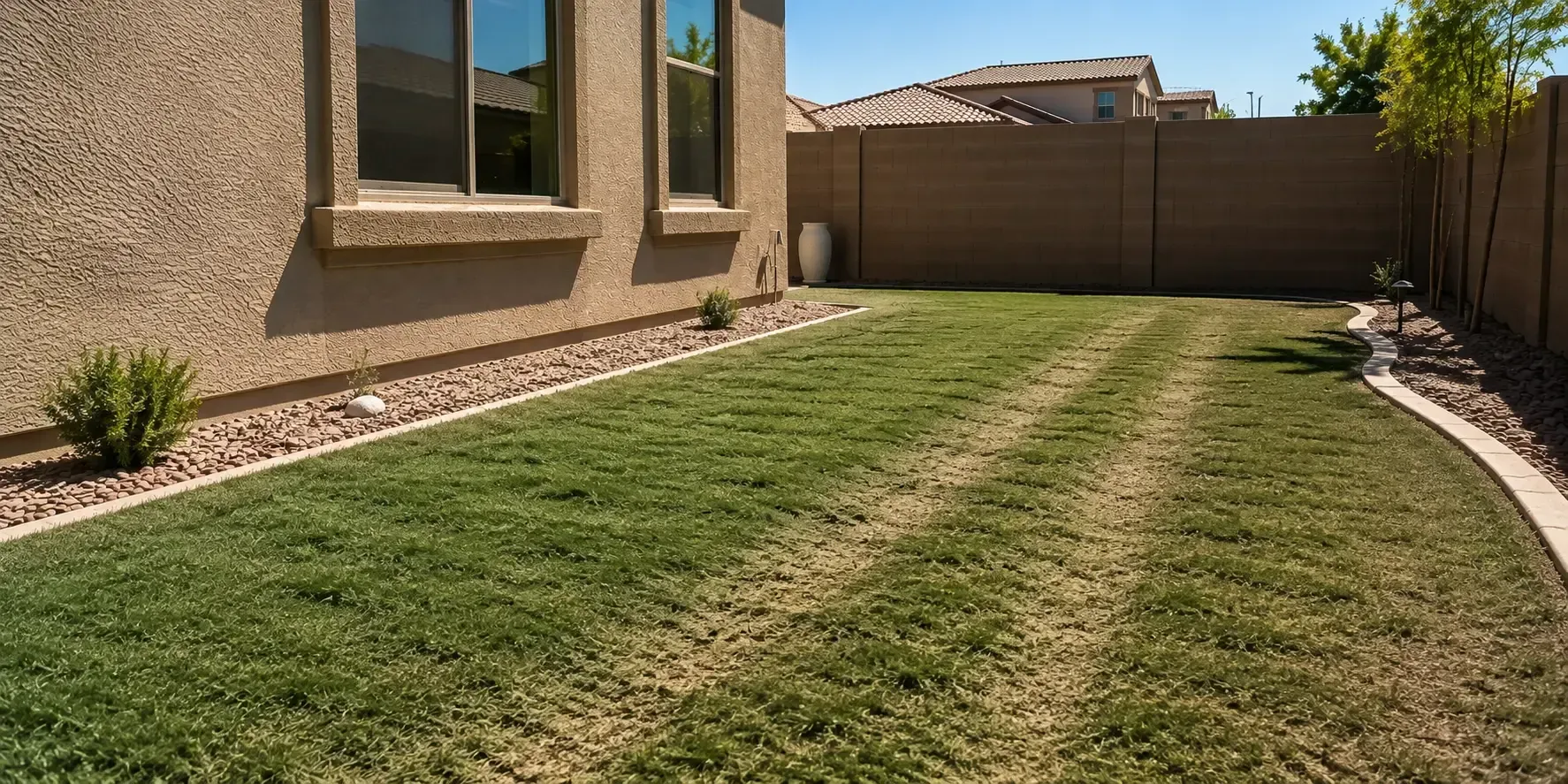
The Heat Stress Factor. When temperatures hit 110°F, cool-season grasses (like Fescue) go dormant to survive. They turn brown. Homeowners panic. They dump more water on the lawn. This leads to fungus. It’s a vicious cycle. Professional lawn maintenance in this climate isn't about mowing; it's about chemical balance and moisture management.
According to local conservation data, switching away from functional grass saves an average of 55 gallons of water per square foot annually. Source: SNWA. That is a staggering number. It’s why the smartest move isn't fighting nature—it's adapting to it.
The New Standard: Artificial Turf Maintenance
Here is the misconception that costs homeowners money: "Artificial grass is zero maintenance."
Wrong. It is low maintenance, not no maintenance.
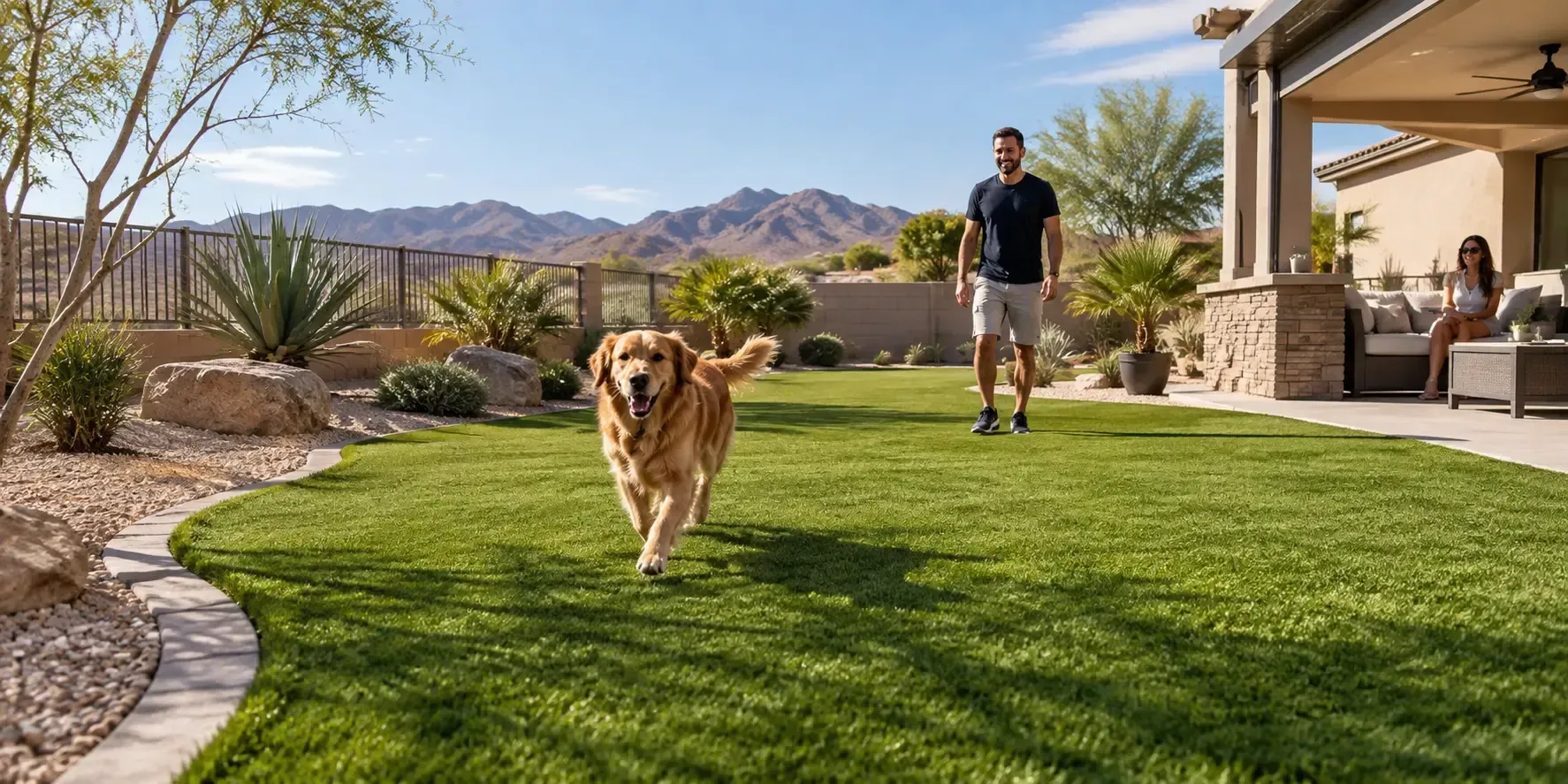
At LFL Henderson Artificial Turf, we see it all the time. A homeowner installs a beautiful synthetic lawn, ignores it for two years, and then wonders why it looks flat and smells like a kennel. Dust from the desert settles deep into the fibers. Pet waste creates bacteria buildup. The infill gets compacted.
To keep that "country club" look, your synthetic lawn maintenance routine needs three things:
1. De-compaction and Brushing
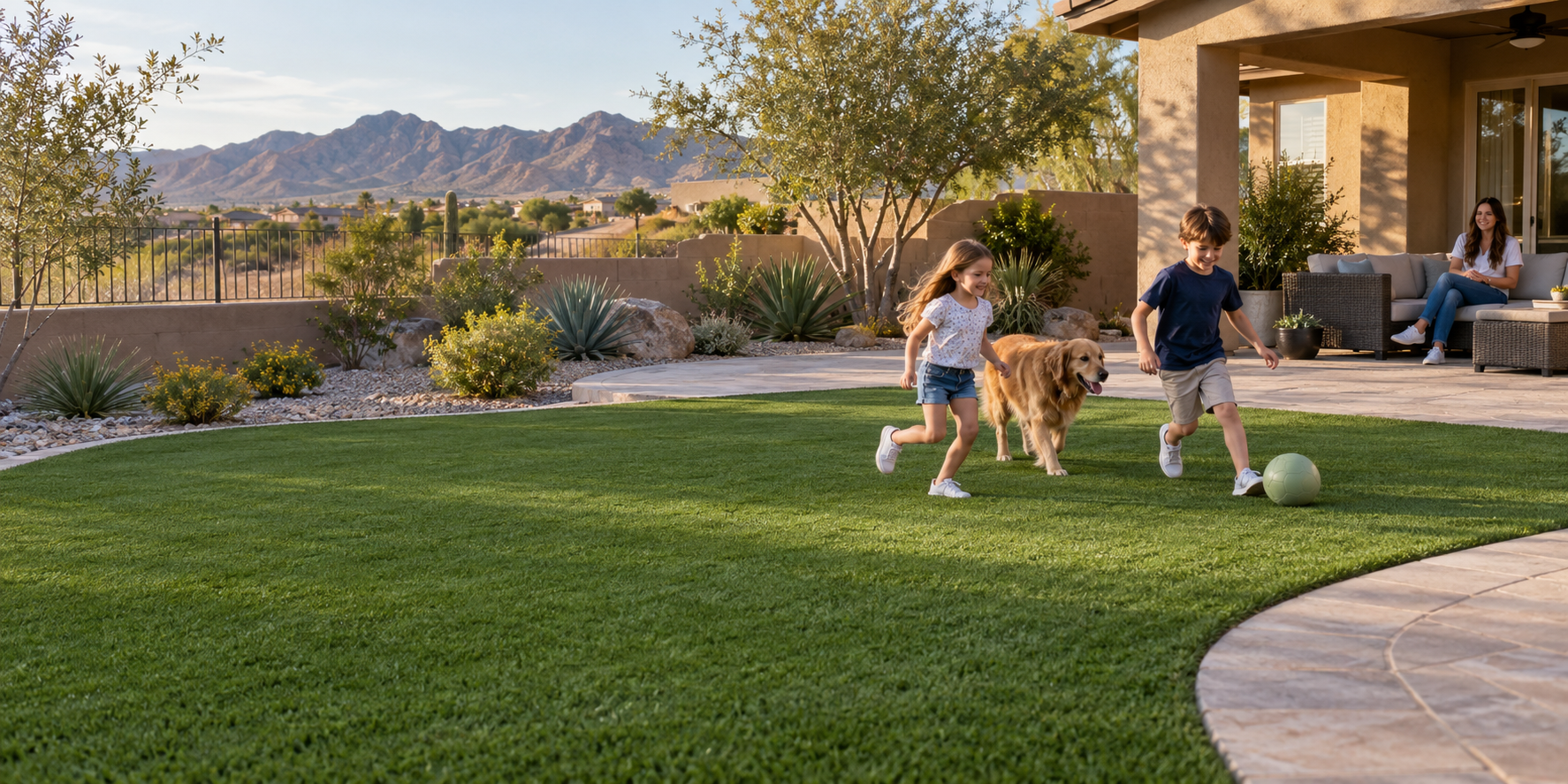
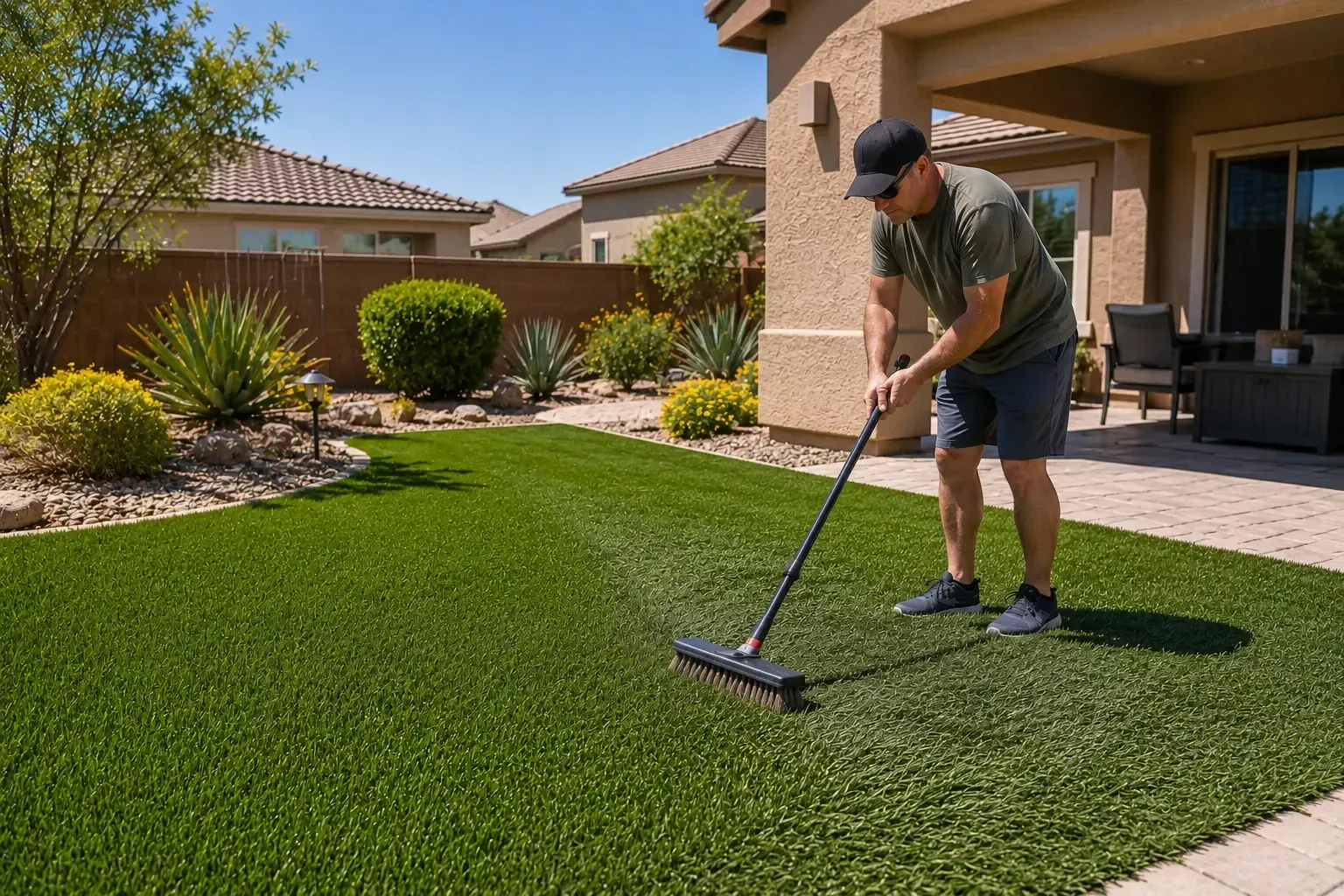
High traffic areas flatten out. Period. If you have kids playing soccer or dogs running the same path, those fibers lay down. Professional power-brushing lifts the blades back up. It restores the loft and makes the yard look brand new again. Ignoring this leads to premature matting, shortening the lifespan of your investment.
2. The "Henderson Dust" Defense
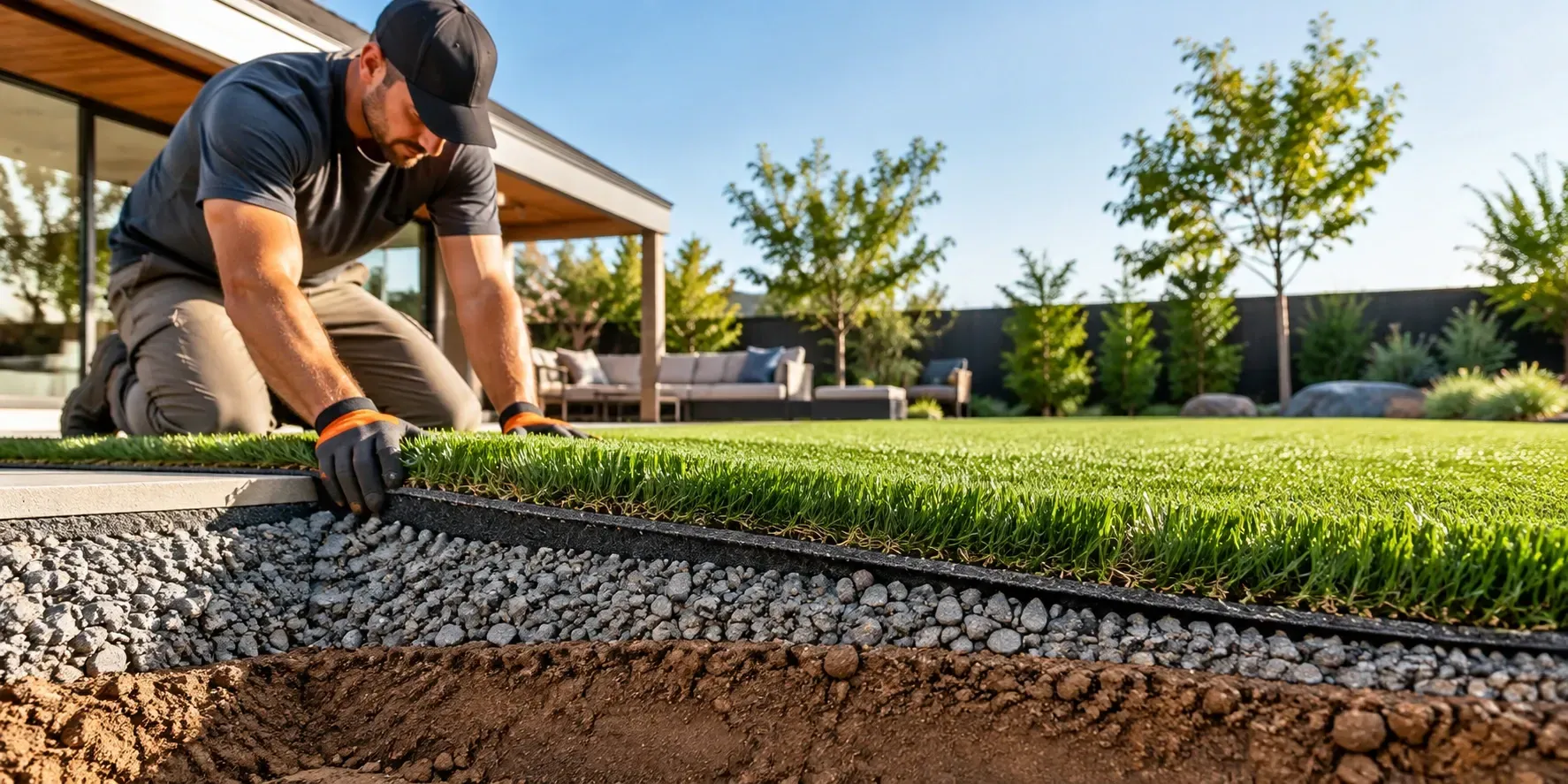
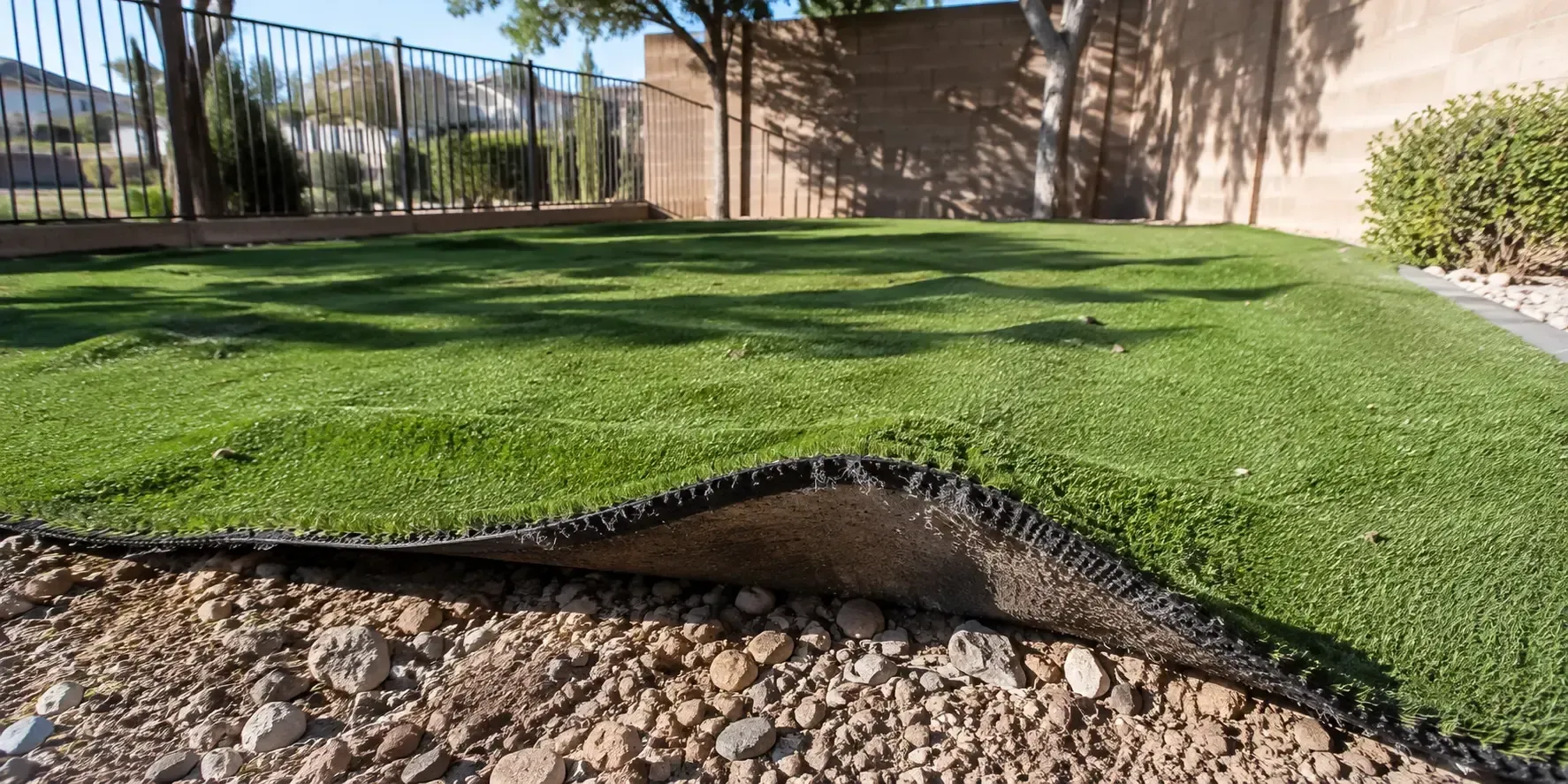
We live in a dust bowl. Over time, a layer of fine silt traps itself between the grass blades. This blocks drainage. When the rare rainstorm hits, or you hose off the patio, the water pools instead of draining. A deep clean and flush are non-negotiable parts of lawn maintenance here. It keeps the backing porous and functional.
3. Bacteria and Odor Control
If you have pets, this is critical. Urine crystals bind to the turf backing. In the summer heat, that smell amplifies. You can’t just spray water on it; that often reactivates the crystals. You need enzymatic cleaners that eat the bacteria. This is where professional service separates itself from a garden hose.
DIY vs. Professional Care: What’s Your Time Worth?
Sure, you can buy a rake and some spray bottles. You can spend your Saturday mornings sweating through your shirt, trying to fluff up 1,000 square feet of turf. But do you have the equipment to deep-clean the infill?
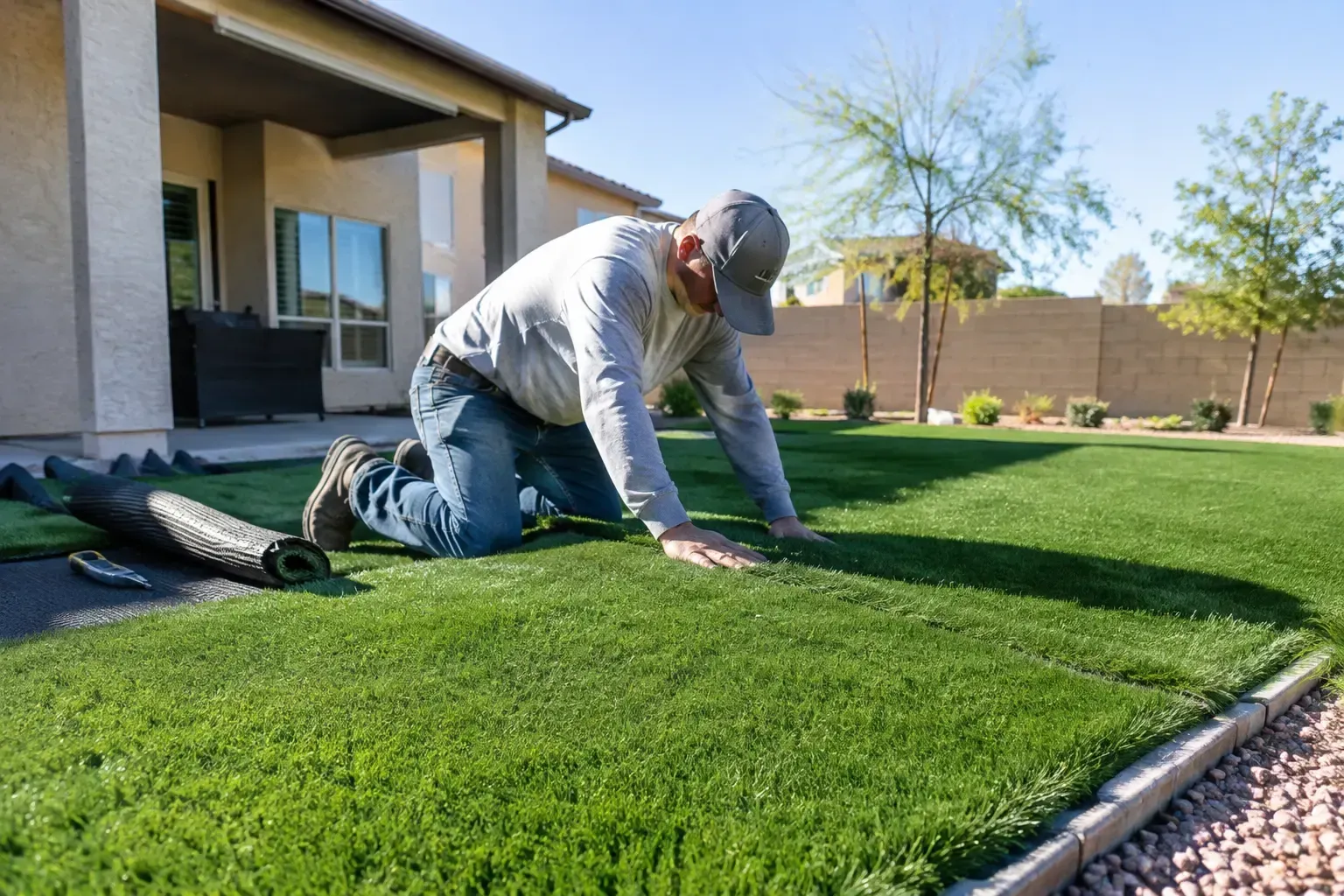
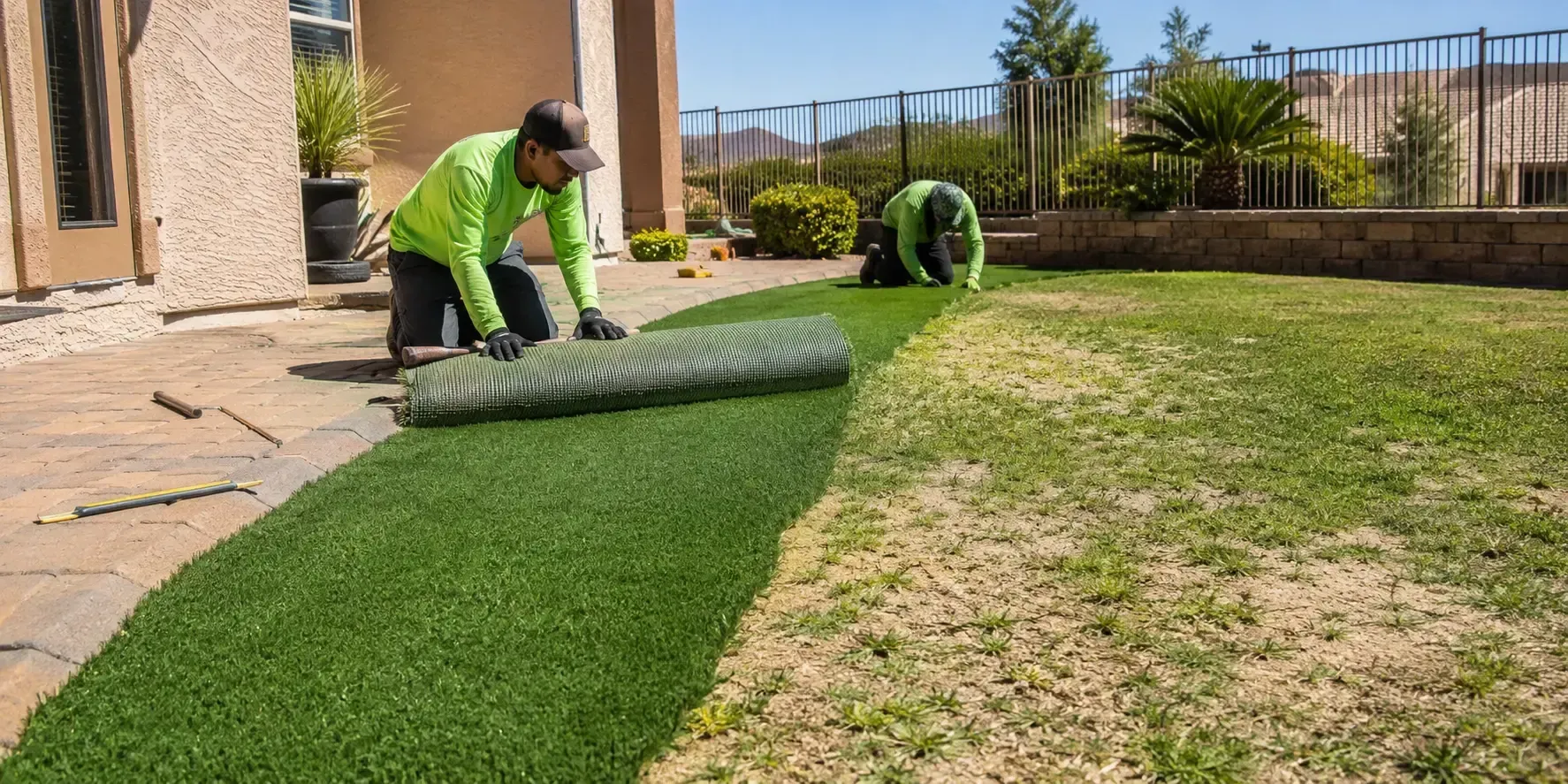
LFL Henderson Artificial Turf approaches maintenance with industrial-grade efficiency. We use specialized power brooms and hospital-grade sanitizers that are safe for pets but lethal to odors. We check the seams. We top up the infill (the sand or silica that weighs the grass down) to ensure the blades stand tall.
Proper maintenance extends the life of your artificial grass by years. It protects the warranty. Most importantly, it keeps the yard sanitary for your family.
Seasonal Maintenance Checklist for Henderson Homes
Whether you have Bermuda grass or premium synthetic turf, the seasons dictate your schedule. The desert moves fast.
- Spring (March-May): The wind season. Debris removal is priority number one. For synthetic yards, check for weed growth along the edges (yes, weeds can grow in the perimeter).
- Summer (June-August): Odor control. The heat cooks everything. Apply turf deodorizers monthly. For natural grass, monitor sprinkler heads daily for leaks.
- Fall (September-November): The recovery phase. This is the best time for power-brushing turf to remove summer compaction.
- Winter (December-February): Frost protection. While rare, hard freezes can make plastic fibers brittle. Avoid walking on frozen turf until the sun hits it.
Why Henderson Chooses LFL
Your outdoor space is an extension of your living room. In Henderson, where we enjoy outdoor living 10 months out of the year, a dirty or dying yard kills the vibe. You want a space that is ready for a BBQ at a moment's notice.
LFL Henderson Artificial Turf doesn't just install; we preserve. We understand the local micro-climate, from the wind tunnels of the foothills to the heat pockets of the valley floor. We provide the lawn maintenance expertise that ensures your investment pays off in curb appeal and property value.
Don't let the desert win. Reclaim your weekend. Let the experts handle the grit, the grime, and the heat.
Frequently Asked Questions
How much does lawn maintenance cost in Henderson, NV?
Costs vary based on size and service type. For natural grass, expect $100-$200 monthly for mowing and fertilization. specialized artificial turf maintenance typically costs between $150 and $300 per visit, depending on square footage and the level of deodorizing required.
How often should artificial turf be professionally cleaned?
For homes with pets or children, a quarterly deep clean is recommended to control odors and bacteria. For low-traffic aesthetic lawns, a bi-annual service (every 6 months) is usually sufficient to maintain blade lift and drainage.
Does artificial grass get too hot in the Henderson summer?
Synthetic turf can get hot in direct sunlight. However, high-quality modern turf utilizes "Cool-yarn" technology to reflect UV rays. Regular lawn maintenance, including infill hydration and rinsing, helps significantly reduce surface temperatures during peak heat hours.
Can weeds grow through artificial turf?
Yes, it is possible but rare if installed correctly. Weeds usually grow around the perimeter or through drainage holes if the weed barrier is compromised. Routine maintenance includes inspecting these areas and applying treatment to prevent breakthrough growth.
Is professional turf cleaning safe for dogs?
Absolutely. Reputable services like LFL Henderson Artificial Turf use non-toxic, enzymatic cleaners specifically designed to break down organic waste without harming pets or children. Always verify the cleaning solution is eco-friendly before service begins.